
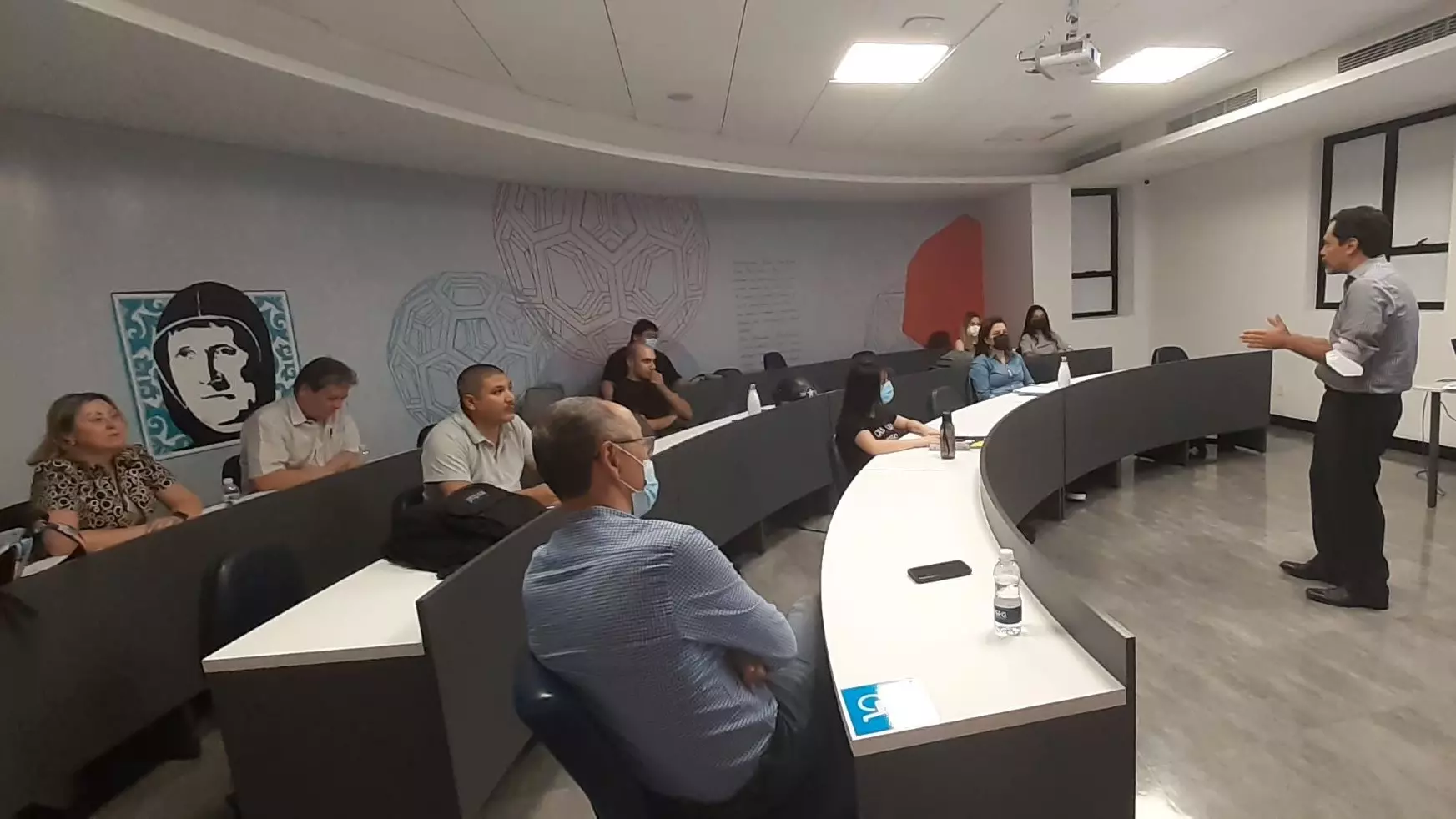
History, culture, and values were the central themes of the meeting.
Have you ever stopped to think about the importance of history for the growth of companies? This was the theme of the inaugural lecture given to the new MBA class at ESEG – Faculdade do Grupo Etapa, whose activities began last Tuesday, March 22nd.
The lecture was held on the second day of classes (Thursday, March 24th) and given by Professor Vinícius Müller, who holds a degree in History, a master's degree in Economics, and a doctorate in Economic History.
The event also included the participation of Professor Silvia Boarin, PhD, coordinator of the postgraduate program at ESEG; Professor Fernando Umezu, PhD, coordinator of the undergraduate program in Economics at ESEG; and Professor Hong Yuh Ching, a faculty member of the course, who contributed to an enriching discussion with the students.
The aim of the activity was to understand how culture and ethics are fundamental to the economic development of countries and companies. To arrive at this answer, Müller, with the help of students and other teachers, created a list of the most developed countries according to the perception of those present. The United States, Germany, China, England, Japan, France, Australia, South Korea, and Uruguay were among the nations mentioned.
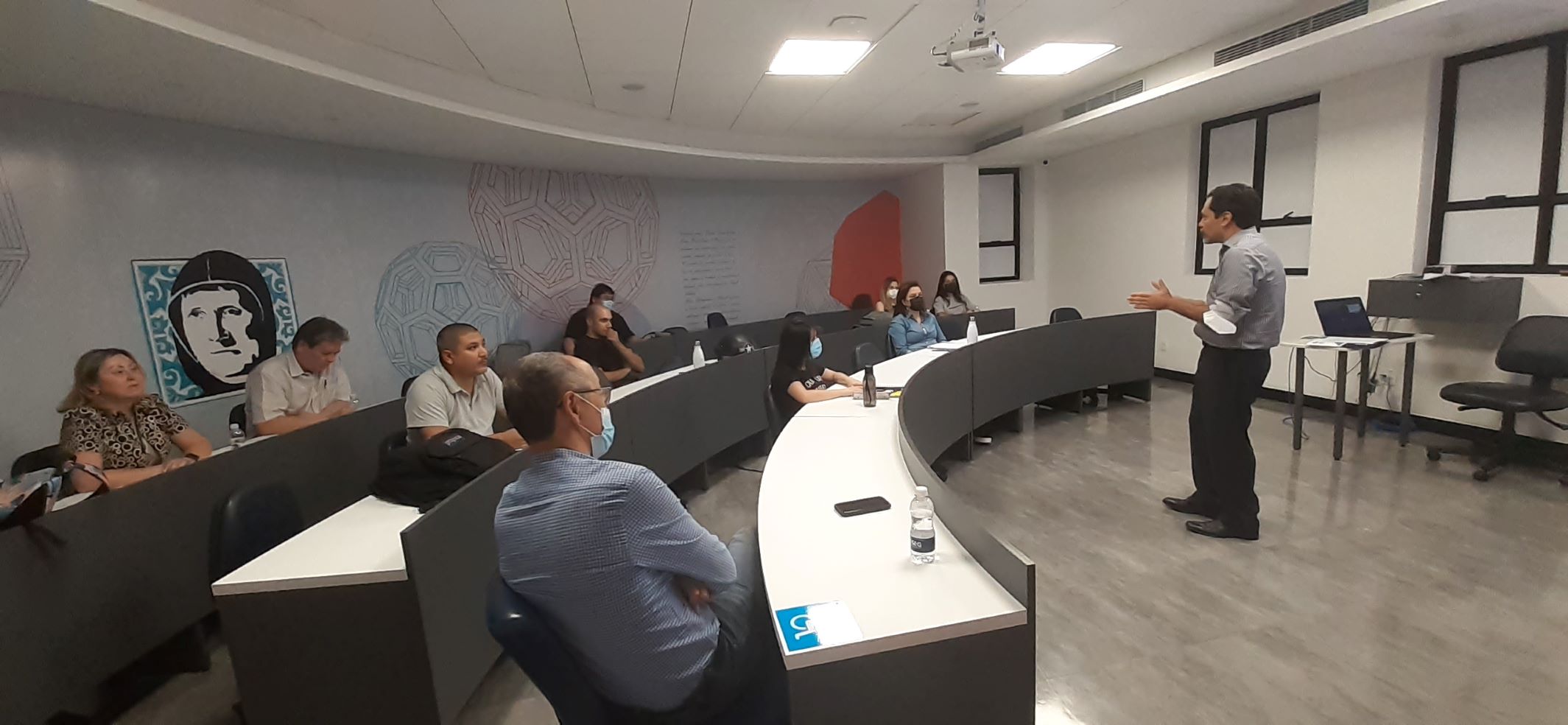
During the conversation, those present investigated, through historical facts, the main reasons why these countries were considered developed. Professor Müller explained that the United States, Germany, England, France, and Japan were pioneers in the Industrial Revolution, which resulted in the strengthening and development of industry in their territories. Another important fact is education. According to Müller, in 1910, 921% of the United States population was already literate.
So the question remains: if education and industrialization are the most relevant aspects for a country's economic development, why wasn't Brazil included in the list created by the participants? Education in Brazil has experienced satisfactory growth in the last 30 years, and its industry is also very strong and diverse. The fact is that industry and education go hand in hand, but the point of intersection between them is not always the same in different countries throughout their history. That's why you can't analyze a nation's development by considering only the present. A historical analysis is necessary.
To justify his conclusion, the professor recounted the history of Japan, a country with a closed culture resistant to the West. “In the 1950s, Tokyo was the 4th or 5th most important city in the world, which sparked the interest of the United States. To enter the Japanese market, the United States started a war. Japan had a problem defending itself: it didn't have a unified government, only various military groups. Because Japan didn't have an army, the country had to change its structure to confront the United States; to do this, it had to eliminate the small, isolated soldiers, the samurai,” the professor explained.
“In Japanese culture, the samurai represents fundamental values: honor, loyalty, courage, and hierarchy. Because values are transferable, the samurai transferred his values to the emperor. If you can transfer the samurai's values to the emperor, you can transfer your values to the company,” he concluded.
With this, everyone present at the lecture was able to understand that economic development may be linked to territory, development, and production, but ethical conduct cannot be excluded from this list.