ESEG Tech & Business consolidates 2025 as a year of practice, innovation, and student leadership.

By ESEG Team
13/02/2026
Browse by topic
Throughout 2025, the program ESEG Tech & Business It reaffirmed its role as a bridge between theory and practice, consolidating a set of initiatives that placed students at the center of applied projects, scientific research, and immersive market experiences.
More than just extracurricular activities, the actions developed throughout 2025 transformed the academic experience into concrete experiences of innovation, leadership, and social impact.
The ESEG Tech & Business program's mission is clear: to integrate teaching, research, and outreach, creating opportunities for students to develop technical and behavioral skills in real-world contexts. In 2025, this purpose took shape through various initiatives that mobilized students from Engineering, Business Administration, Economics, and Law in interdisciplinary projects.
Among the highlights of the year is the continuation of the ESEG & InCor umbrella project, carried out in partnership with the Heart Institute of the Hospital das Clínicas of the Faculty of Medicine of USP. The initiative involves the digitization of approximately 7,000 clinical records of congenital heart disease surgeries, currently recorded on paper, using advanced image recognition techniques based on Artificial Intelligence.
Under the supervision of Prof. Dr. Marcelo Biscegli Jatene, director of the Pediatric Cardiac Surgery unit at InCor, and coordination of Prof. Dr. João Chang Junior, professor and leader of the Development Centers at ESEG, Computer Engineering students actively participated in building technological solutions to organize, process, and structure historical clinical data, directly contributing to the improvement of research and analysis in health.
Beyond this project, other scientific initiations reinforced the applied nature of the training. Production Engineering students developed studies on predicting OEE drops using statistical techniques and machine learning, as well as applying Quality Engineering tools to the control of laboratory tests. In Economics, research addressed topics such as the Phillips Curve and default in Brazil, connecting economic theory to contemporary challenges.
The Center for Artificial Intelligence Studies also gained prominence in 2025 by proposing critical reflections on the use of AI in Higher Education and professional careers. More than discussing technical concepts, students were challenged to analyze statistical limitations, risks of bias, and ethical implications of using these tools.
The resulting reports demonstrated academic maturity by addressing the excessive reliance on technology, its impact on intellectual authorship, and the need for responsible AI practices. The exercise included the structured use of Artificial Intelligence tools in the construction of their own work, with critical analysis of the prompts used, the responses generated, and the limitations identified.
Experience has shown that technology training at ESEG College is not limited to the instrumental mastery of tools, but includes ethical reflection and the development of intellectual autonomy.
To inspire, challenge, and transform talent into performance. With this spirit, ESEG promoted, in the first semester of 2025, a practice test to prepare for programming competitions, within the Speedy Coders initiative.
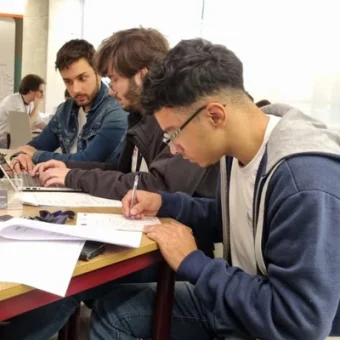
The training focused on preparing for the Brazilian Computer Society (SBC) Programming Marathon, held annually by the SBC. During the simulation, students were divided into teams of three and faced logic and programming challenges under a time limit, replicating the real conditions of the competition.
The activity demanded agility, quick thinking, and teamwork, with the aim of familiarizing students with the pace and pressure of the competition. For the participants, the experience served as a gauge of the level of preparation required.
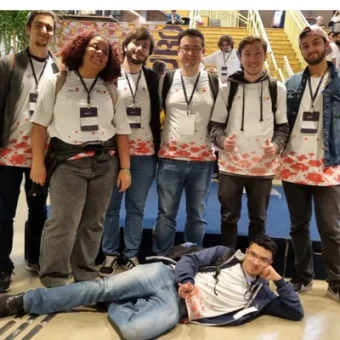
The results of the training could be seen in the second semester, when Computer Engineering students represented ESEG College for the first time in a regional stage of the competition. SBC Programming Marathon, held at the University City of São Paulo.
Considered the largest university programming competition in the country, the Marathon follows the model of the International Collegiate Programming Contest, one of the most traditional academic competitions in the world. Teams have five hours to solve up to 13 complex problems involving algorithms and computational logic, and are evaluated based on the number of problems solved, time spent, and incorrect attempts.
ESEG was represented by two groups of three students. In their institutional debut, the students solved three exercises, a result considered significant for their first participation. More than the score, the practical experience in an environment of high technical and emotional demands stood out.
The competition contributed to broadening academic training, requiring the improvement of skills such as time management, decision-making under pressure, and creativity.
Another important aspect of ESEG Tech & Business was the Negotiation and Mediation League, an initiative open to students from different courses. Based on the Harvard method, presented in the book "Getting to Yes," the League promoted lectures, case studies, and practical simulations.
The students participated in structured role-plays (practical simulations of real-life situations), applying concepts such as separating people from the problem, identifying interests, using objective criteria, and building win-win alternatives. Throughout the semester, the students' progress in active listening, argumentation, option generation, and confidence in conducting negotiations was noticeable.
The integration between students of Engineering, Business Administration, Economics, and Law broadened the perspectives of analysis, making the simulations more complex and realistic. This reflects the interdisciplinary environment that characterizes the ESEG Faculty.
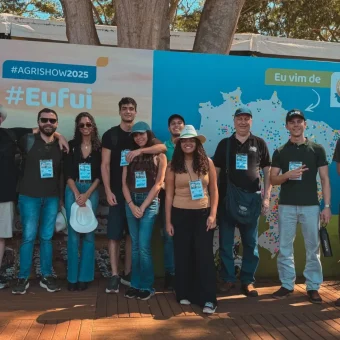
Inspired by the students' visit to Agrishow, In Ribeirão Preto, the Agribusiness League was founded in 2025. Structured with its own statutes, recruitment plan, and defined board of directors, the League quickly established itself as a space for strategic training on the sector that represents a significant portion of Brazil's GDP.
The opening lecture “Smart Finance in Agribusiness”"This officially marked the beginning of activities. Throughout the semester, the members themselves conducted training sessions on the production chain, mechanization, digitalization in the field, financial management, and trends such as precision agriculture and Machines-as-a-Service (MaaS), a business model in which companies do not buy machines, but pay for their use or performance, as a service.".
Participation in meetups at Itaú Cube And in panels about agricultural startups, it broadened the students' knowledge and strengthened connections with the innovation ecosystem.
Another highlight of the year was the Book Club's work, which focused on the book "Start with Why" by Simon Sinek. The meetings were structured around a segmented and guided reading, with support from the Virtual Learning Environment, a platform where reviews, guidance, and supplementary materials were made available.
The Club's dynamics reinforce student leadership: the books and schedules are defined by the students themselves, through electronic forms. In a collective discussion format, the meetings ensured space for the active participation of everyone, with mediation focused on organizing the discussions and deepening the central themes of the book, especially the reflection on purpose, leadership, and strategic clarity.
The initiative broadened the students' conceptual repertoire and strengthened skills such as argumentation, active listening, and structured thinking, aligned with the educational proposal of ESEG Tech & Business.
By integrating scientific projects, debates on technology, development of soft skills, and immersive market experiences, ESEG Tech & Business has consolidated 2025 as a year of institutional maturity and student leadership.
The students not only studied concepts: they applied statistical models to real data, discussed the ethical limits of Artificial Intelligence, faced complex programming challenges under pressure, simulated complex negotiations, and engaged in dialogue with professionals from agribusiness and innovation.
More than just supplementary activities, these initiatives demonstrate an academic model that prepares professionals capable of thinking critically, acting strategically, and innovating responsibly.
In an increasingly challenging and technological landscape, ESEG College reaffirms, through ESEG Tech & Business, its commitment to an education connected to the present and prepared to lead the future.



ESEG Team
Stay informed about relevant topics and what's happening at ESEG College.
Your data is safe.
Unavailable
Institutional
Infrastructure
Entry methods
Relationship
Key differentiators
We use cookies to improve your browsing experience.