




How much does a production engineer earn? Salary and job market.

Quem pesquisa sobre Engenharia de Produção geralmente quer responder duas perguntas: quanto ganha um engenheiro de produção e como está o mercado de trabalho para a profissão. A resposta não cabe em um único número. A remuneração varia de acordo com fatores como experiência, setor de atuação, porte da empresa, localização e nível de qualificação. […]
Production Engineering in São Paulo: curriculum, job market, and salaries in 2026

Production Engineering remains among the most valued courses in the market. In a scenario where companies seek greater efficiency, process integration, and data-driven decisions, production engineers have gained prominence in various sectors of the economy. But what exactly is studied in this undergraduate program? How does the curriculum work? Which areas hire the most?
Production engineering in practice: discover the sectors that hire the most in Brazil.

When we talk about production engineering, we automatically think of factories and the production floor. But the field of work for a production engineer goes far beyond that. Professionals can work in diverse areas, from industry to specialized consulting firms, always with the goal of optimizing processes and increasing company efficiency. In this article, you will learn about the main areas that hire production engineers in Brazil and understand why this field continues to grow and diversify. What is production engineering and where is it applied? Production engineering is an area of engineering focused on the management and optimization of production processes. It involves the planning, control, and improvement of industrial and business operations, with the goal of maximizing efficiency and reducing costs. Professionals in this area use concepts from mathematics, physics, and economics to develop practical solutions that ensure greater competitiveness in the market. With the constant evolution of Industry 4.0, production engineering has expanded to sectors beyond factories, reaching areas such as business consulting, logistics, and project management. This means that, in addition to working in the traditional industrial sector, production engineers now have several options…
3D printing and biotechnology are growing in Production Engineering; see applications.
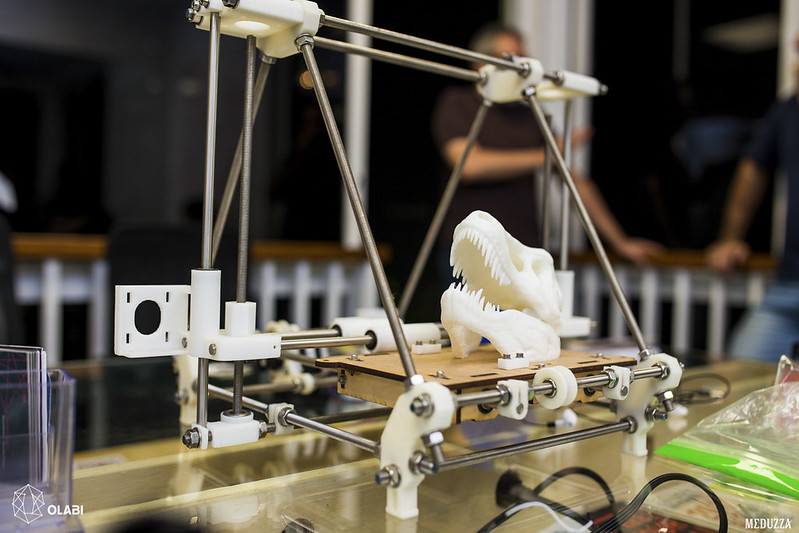
Technology is a great ally of Production Engineering. Among the new services available, 3D printing and biotechnology stand out.
Changing professional profile: the role of universities in the job market.

Changing Professional Profile: The Role of Universities in the Job Market. Schools train university students for increasingly demanding selection processes. Group dynamics, presentations in English, interview marathons. The selection processes for entry into large national and multinational companies are becoming increasingly demanding. Despite representing less than 151% of the total population, the number of Brazilians with higher education grew by 62.6% between 2006 and 2016, according to INEP (National Institute of Educational Studies and Research). This fiercer competition means that the skills required in the market are becoming increasingly complex. With a scenario of rapid innovation and qualified professionals, the training provided by universities must go beyond the classroom and theoretical foundations. Many institutions already work with strategies focused on improving students' skills for the most competitive selection processes. Professional placement is one of the indicators that reflect the quality of higher education. In addition to a good academic education, it is important that universities also focus on developing their students' so-called soft skills. Examples of skills of this nature include knowing how to work in a team, creative thinking, resilience, and empathy in communication. Core…
Entrepreneurship can be a path to success for young people with higher education.

Stimulating the development of good ideas also helps with entry into the corporate world. With almost 50 million entrepreneurs, Brazil has become a country of micro and small business owners. The percentage of young Brazilians who have decided to start their own business has been growing in recent years. According to Sebrae (Brazilian Micro and Small Business Support Service), in 2017 the number of people aged 18 to 34 among early-stage entrepreneurs rose from 501 to 571. The number of entrepreneurs who started a business because they saw an opportunity, not out of necessity, also grew, from 571 to 591. However, the profile of the Brazilian entrepreneur is still poorly educated. Almost 8 million established entrepreneurs, those considered consolidated in the market, have not completed high school. Within this same group, 2 million have completed higher education. The most educated entrepreneurs, who represent the smallest portion of this universe, have the greatest opportunities for business success. The role of the university in the training of entrepreneurs has been changing over the last few years. If, a few decades ago, getting a job in a private company or pursuing a career in public service were the natural paths for those graduating from higher education, today starting one's own business...


