




Choosing a degree is a decision that directly impacts one's professional career.
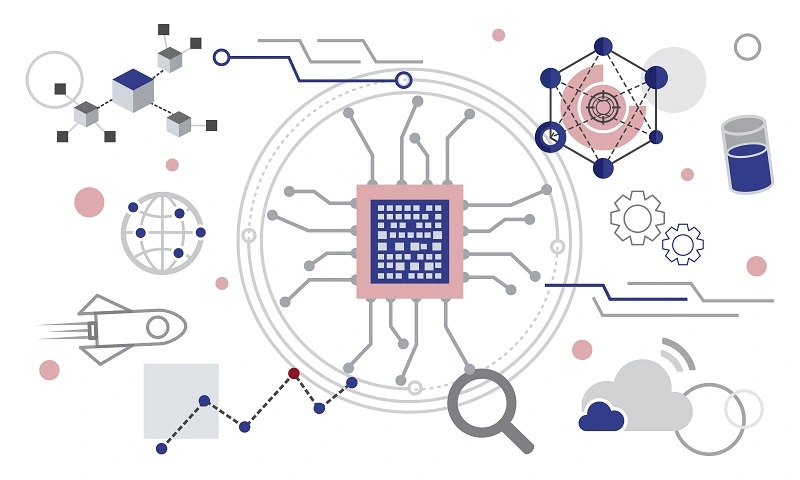
For those who enjoy technology, innovation, programming, and developing intelligent solutions, investing in a Computer Engineering course can open doors to a constantly expanding market.
A Faculty of Computer Engineering at ESEG It was developed to train professionals prepared to work in different areas of technology, combining knowledge of hardware, software, artificial intelligence, automation, and data science.
In addition to a solid engineering education, students are exposed to practical methodologies, interdisciplinary projects, and technologies that are part of the present and future of the market.
In this article, you will discover what the Computer Engineering program at ESEG is like, how long the degree takes, what the curriculum is like, what makes the institution stand out, and where a computer engineer can work.
Keep reading to learn more!
How long does the Computer Engineering course at ESEG last?
O Computer Engineering course at ESEG it has a duration of five years (10 semesters), during the period day and night.
Throughout their undergraduate studies, students develop skills in mathematics, physics, electronics, programming, computer architecture, artificial intelligence, networking, information security, and software engineering.
The program is structured to balance theory and practice, allowing students to develop real-world projects and gain experience from the very first semesters.
What is the Computer Engineering Faculty like at ESEG?
A Computer engineering at ESEG (in-person) It offers training focused on the current challenges of technology and digital transformation.
The course was designed to keep pace with market evolution, preparing professionals capable of creating intelligent systems, developing computational solutions, designing electronic equipment, and working on multidisciplinary projects.
During their undergraduate studies, students learn to integrate hardware and software to solve complex problems, using technologies present in different sectors.
Another distinguishing feature is the constant updating of the curriculum, which includes topics such as:
- Artificial intelligence;
- Internet of Things (IoT);
- Data Science;
- Software Engineering;
- Computer Security;
- Microelectronics;
- Cloud Computing;
- Embedded Systems;
- Mobile Development;
- Entrepreneurship and innovation.
In addition to technical training, ESEG College encourages the development of skills such as leadership, communication, critical thinking, and teamwork, characteristics that are increasingly valued by companies.
Benefits of studying Computer Engineering at ESEG
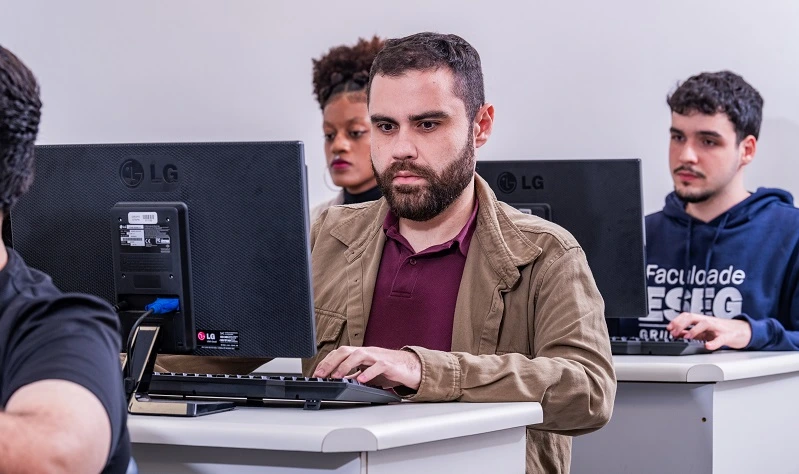
Studying at ESEG College means being part of an institution that seeks to align academic training with the needs of the job market.
Key differentiators include:
Contact with emerging technologies
The course covers strategic areas that are shaping the future of technology, such as:
- Internet of Things (IoT);
- Artificial intelligence;
- Machine Learning;
- Microelectronics;
- Data Science;
- Big Data;
- 3D printing;
- Cloud Computing;
- Intelligent Systems.
This approach allows students to keep up with trends and develop highly valued skills.
Strong background in programming.
Throughout the degree program, students develop skills in various programming languages and learn to build complete systems, from web applications to solutions for embedded devices and mobile applications.
The program also covers software engineering, systems architecture, and the development of scalable solutions.
Teaching English in the curriculum
English is essential for technology professionals.
At ESEG, language is an integral part of academic training, facilitating access to technical documentation, scientific articles, international certifications, and opportunities in global companies.
International experience
A ESEG maintains international partnerships., allowing students to access global academic experiences and broaden their perspective on innovation, business, and technology.
This contact with foreign universities contributes to an even more complete education.
Individualized support for the student
One of the most frequently mentioned characteristics by our students is the close relationship with the professors. Throughout their undergraduate studies, students benefit from close support from the faculty, fostering academic and professional development.
This proximity makes it easier to resolve doubts and contributes to a more personalized and welcoming university experience.
Career Development Center
Another distinguishing feature is the Career Development Center (CDC).
The department assists students at different stages of their professional integration, offering:
- Guidelines for creating a resume;
- Preparation for selection processes;
- Interview simulation;
- development of behavioral skills;
- support for career planning.
Exclusive opportunities platform
Students also have access to an exclusive platform with internship and job opportunities posted by companies partnered with ESEG College.
This broadens the possibilities of entering the job market even during undergraduate studies.
Computer Engineering curriculum in São Paulo
The Computer Engineering curriculum at ESEG was designed to keep pace with technological advancements and prepare professionals capable of working in various sectors.
In addition to the fundamental engineering disciplines, the course includes content focused on the latest technologies.
Among the topics studied throughout the undergraduate program are:
- Calculation;
- Physical;
- Linear Algebra;
- Electronics;
- Digital Circuits;
- Computer Architecture;
- Schedule;
- Data Structures;
- Database;
- Advanced Software Engineering;
- Artificial intelligence;
- Internet of Things (IoT);
- Microelectronics;
- Programming for Mobile Devices;
- Computer Security;
- Computer Networks;
- Data Science;
- Embedded Systems;
- Entrepreneurship;
- Project Management.
The curriculum also encourages the development of integrative projects, bringing students closer to the challenges faced by companies.
Upon graduation, the student will be prepared to design complete computer systems, develop software, create smart devices, and lead technological projects.
Where can a computer engineer work?
The market for computer engineers is growing, driven by digital transformation.
Companies in virtually every sector need professionals capable of developing technological solutions, automating processes, and implementing intelligent systems.
Therefore, graduates can work in:
- technology companies;
- industries;
- Banks and fintechs;
- startups;
- telecommunications companies;
- automotive sector;
- Energy companies;
- hospitals;
- technology consulting firms;
- information security companies;
- public bodies;
- research centers;
- financial institutions;
- software development companies;
- Robotics and automation companies.
There is also room for entrepreneurship, creating startups and developing your own technological products, which is encouraged by the university during undergraduate studies.
Computer engineering jobs

Graduates find diverse career opportunities available to them.
Among the main positions are:
- Computer Engineer;
- Software Developer;
- Software Engineer;
- Data Scientist;
- Data Engineer;
- Full Stack Developer;
- Mobile Developer;
- Artificial Intelligence Specialist;
- Machine Learning Engineer;
- Embedded Systems Engineer;
- IoT Engineer;
- Information Security Analyst;
- Software Architect;
- Cloud Computing Specialist;
- Network Engineer;
- Automation Engineer;
- Technology Consultant;
- IT Project Manager;
- Researcher in Technology.
A multidisciplinary education in Computer Engineering allows professionals to move between different areas of computing and engineering, significantly expanding their career opportunities.
Conclusion about the Computer Engineering Faculty in São Paulo
A Computer Engineering in São Paulo At ESEG College, we combine a solid education with an approach focused on innovation, technology, and developing solutions for the challenges of today's world.
Throughout the five years of their undergraduate program, students are exposed to areas such as Artificial Intelligence, Internet of Things, Data Science, Big Data, Software Engineering, Microelectronics, and Computer Security, always integrating theory and practice.
Beyond academic excellence, with the teaching DNA of the Etapa Group, the institution offers unique features such as English language instruction in the curriculum, international partnerships, individualized support, a Career Development Center, and an exclusive platform for job opportunities with partner companies.
For those seeking training aligned with market demands and wishing to study in one of best Computer Engineering colleges, Learning about ESEG's proposal is an excellent first step.
If you would like to know more about the Computer Engineering degree program at ESEG, the tuition fees, admission procedures, and other relevant information, please visit our website. Computer Engineering course, Visit the institution's official website and discover how to begin your journey in one of today's most promising professions.