The career path and job market for engineers were the topic of a meeting at the ESEG Orientation Cycle, which brought together professionals and professors from the field of Engineering with students from the Etapa Course.
The event's coordinating committee consisted of: from ESEG, professors Silvia Boarin, Marcelo Gonçalves, Pablo Ganassim, and Marcelo Dias, and the psychopedagogue and HR specialist Jaqueline Angelotti; and the invited engineers Nelson Hanesaka, from Honeywell; Caroline Bisioli Prado, from Bradesco; and Alberto Egami, from Oracle.
The students initially attended a brief presentation by Professor and Engineer Marcelo Dias, from ESEG, who spoke about the differences between engineering courses and specializations. He also commented on the important role of engineering in recovering from the current crisis scenario that Brazil has been experiencing and highlighted that the resumption of the country's economic growth will bring opportunities for engineers in all areas.
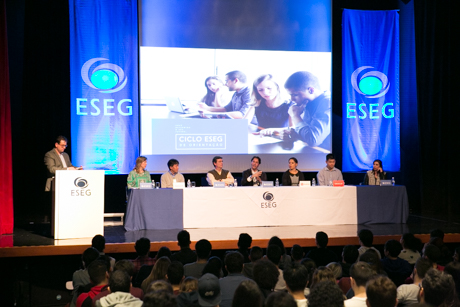
Next, the panelists discussed careers in Engineering and answered students' questions, which covered choosing the ideal course, the importance of internships, trainee selection processes, interview etiquette, workplace behavior, and even entrepreneurial opportunities.
Caroline Bisioli Prado, from Bradesco, said she was hesitant to take a position at the financial institution because she believed her degree in Computer Engineering wouldn't be relevant to the job. “I discovered in my daily work that my job is all about Information Technology and digital security. It's important for young people who want to pursue this career to know that the choice isn't final and that they will need to continue improving their studies and participating in courses and specializations.”.
At the end of the event, the students had the opportunity to ask questions of the guests in person.