
The ESEG Extension course was conducted by the Center for Economics and Finance and had over 60 participants.
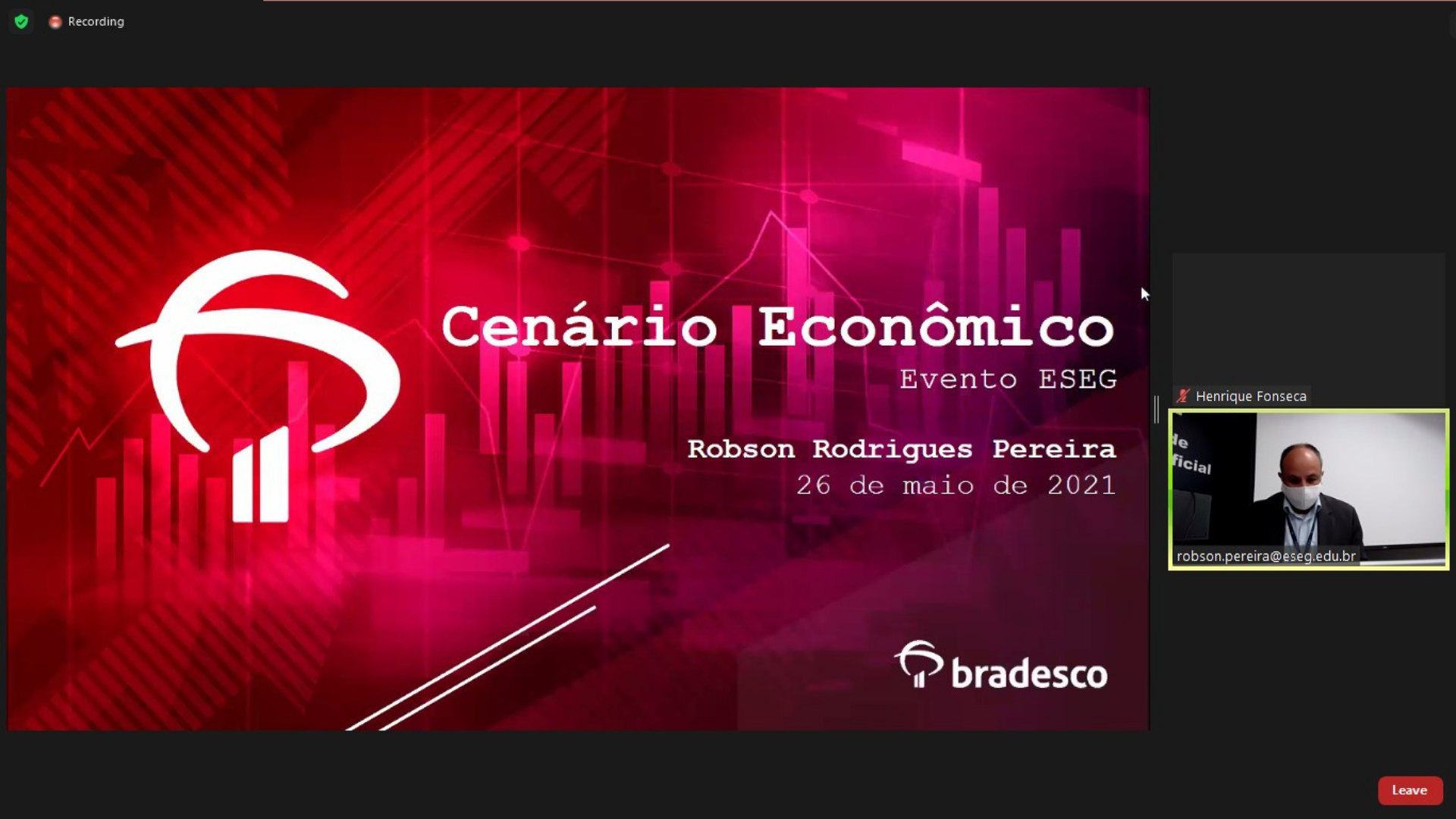
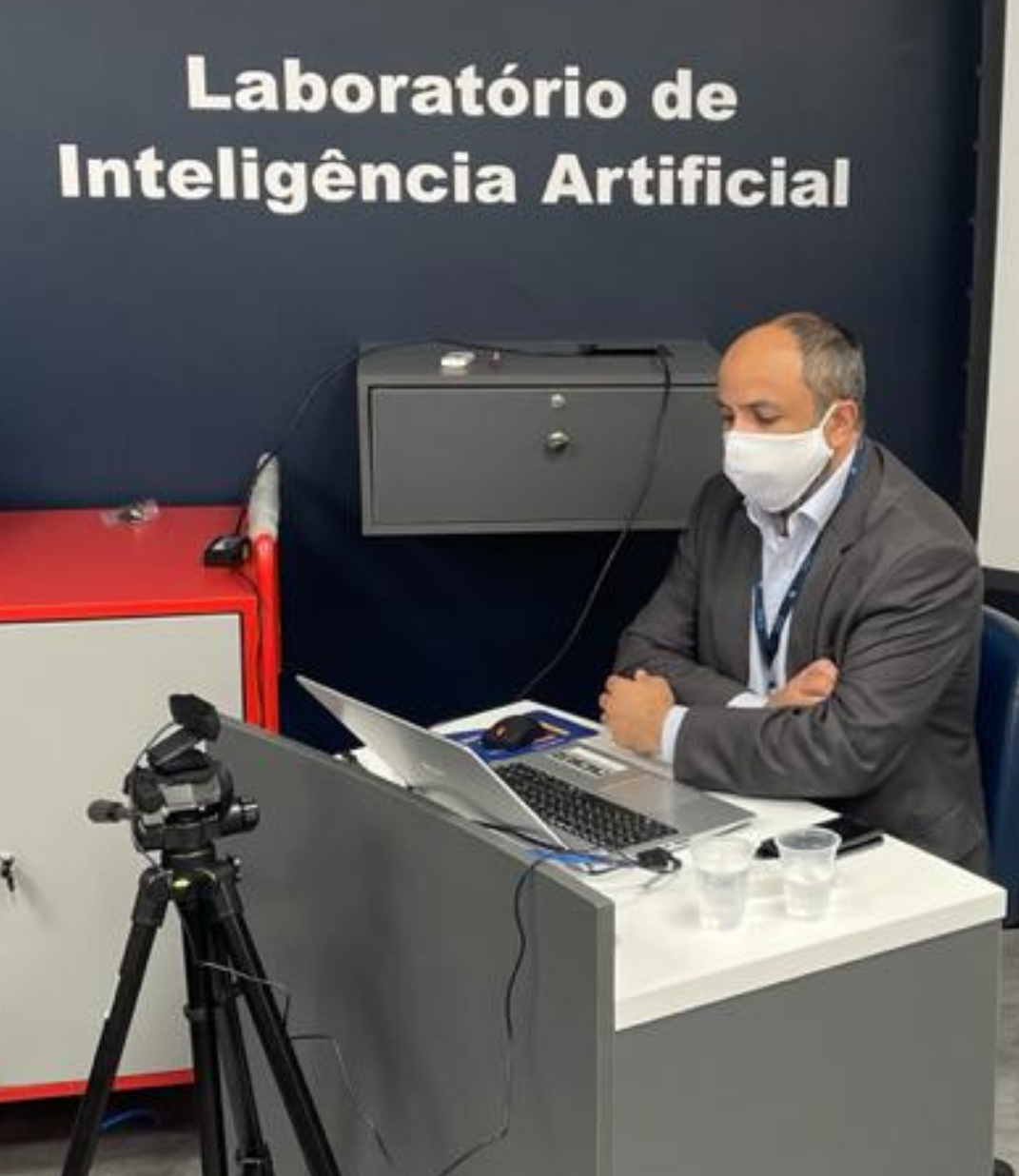
With mediation by Professor Fernando Umezu, PhD, coordinator of the Economics and Finance research center, the ESEG Extension program featured Robson Rodrigues Pereira, senior economist from the Economic Department of Banco Bradesco, as the speaker. On May 26th, the professional presented an analysis of the current Brazilian economic context.
Robson Pereira, who also teaches at ESEG in the Administration, Law, Production Engineering, and Economics programs, began by presenting perspectives on the global and domestic scenarios. Regarding the world, there is a view of a recovery in economic activity, despite short-term risks related to the advancement of the pandemic in various regions.
“Global GDP growth in 2021 is expected to be the highest in the last 40 years, which tends to be favored by advances in immunization, the maintenance of monetary and fiscal stimulus, and a process of replenishment of industrial inventories. The risks to this scenario are related, in addition to the evolution of the pandemic, to inflationary pressures that have emerged in various parts of the world, including in asset prices, such as real estate in the US. This situation stems from a combination of supply constraints with increased demand, in an environment of abundant international liquidity, which can be seen in the strong expansion of the money supply,” explained the economist.
Regarding Brazil, Professor Robson presented a view that the second wave of the pandemic in the country generated smaller impacts on the economy than predicted, despite the regrettable loss of life that has occurred. The projected GDP growth for this year, of 3.31% of the total GDP per capita (TP3T), has an upward bias, towards 4.01% of the TP3T or slightly more.
 “The risks, in this case, are also related to the pandemic (a possible third wave) and supply-side restrictions, with several companies pointing to production limitations due to a lack of inputs,” commented the professor. “Inflation has been accelerating, which justifies the Central Bank's actions, which initiated a process of raising the basic interest rate, the Selic. This process of raising interest rates tends to be smaller the faster a solution is found for the fiscal risks in the country.”.
At the end, participants were able to ask Professor Robson Pereira questions to clarify any doubts. The result was a rich exchange of information.