By Renata Heining
25/08/2026
Browse by topic
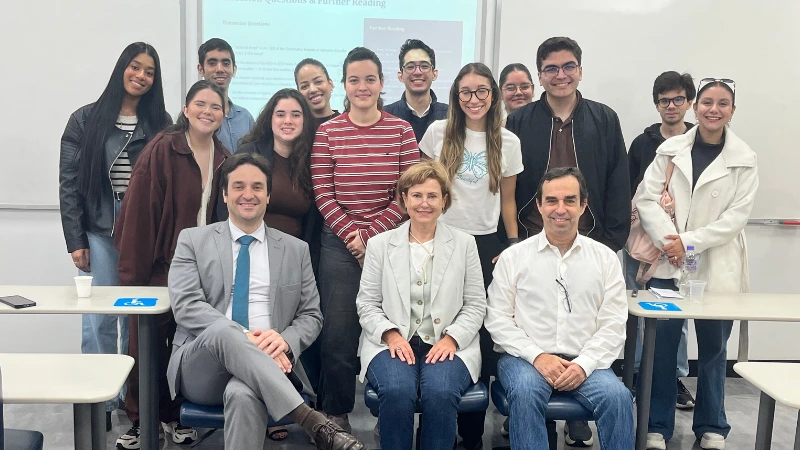
On August 24, 2026, ESEG College continued its program: Contemporary Topics in Economics, a series of 13 lectures that will be held over the next few Mondays, with discussions on current topics in the economy, the market and society.
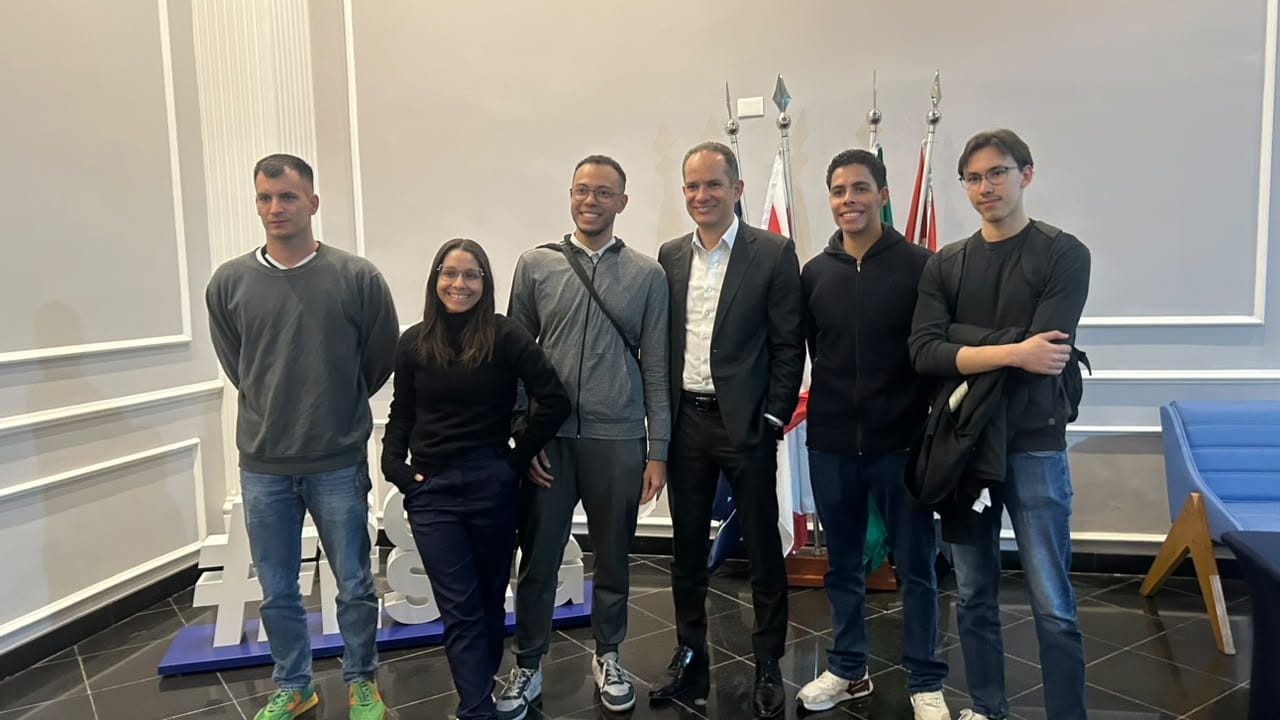
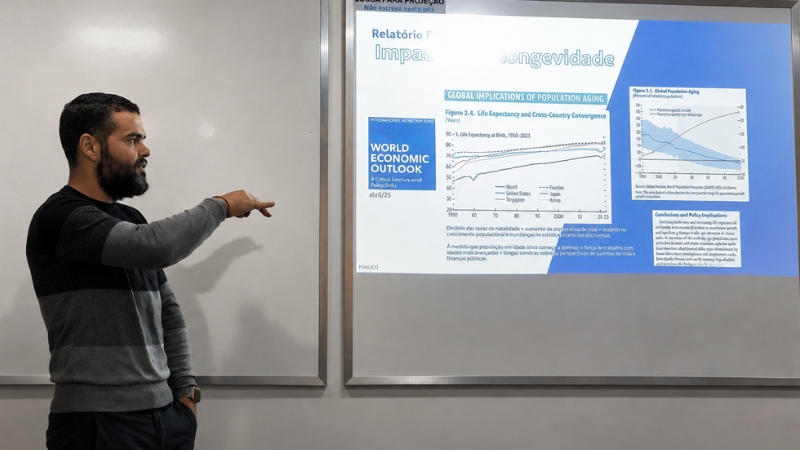
The lecture was conducted by Ronnye Bernardo, leader of the Longevity area at Brasilprev, focusing on the silver economy, which led students to reflect on longevity and the impacts of population aging on the economy and the job market.
The meeting encouraged students to reflect on how the choices they make in the present can influence their quality of life and financial sustainability in the future.
Speaking about the invitation to participate in the program, Ronnye highlighted his satisfaction in sharing his experience with the students, especially since he also has... training in Administration.
“"I received Professor Robson's invitation with great satisfaction, I was very pleased, especially because we will be discussing a very current topic, which is longevity," said the speaker.
During the lecture, Ronnye presented longevity not only as the possibility of living longer, but as an issue that involves... Quality of life, planning and preparation. The discussion began with a central question: if people are living longer and longer, how will they be able to support themselves and maintain a balanced life during this period?
According to the speaker, thinking about longevity requires considering three main dimensions: physical, financial and emotional. For him, although the three are connected, the financial dimension plays an important role in sustaining the others. "Without finances, without a minimum of financial means, it's difficult to maintain emotional and physical well-being," Ronnye explained.
The lecture also led students to reflect on their own relationship with the future. Instead of thinking about longevity only when old age is already near, the proposal was to understand that preparation begins much earlier, starting with the decisions made during academic and professional life.
Another point addressed was the impact of population aging on different sectors of society. Ronnye presented data and examples from countries that are already facing significant changes due to the increase in the elderly population.
The discussion touched on areas such as Education, health, social security, insurance, technology, and the job market. Japan, for example, was presented as a country already facing a shrinking workforce due to an aging population, increasing the need for investments in automation, robotics, and technology.
This scenario also presents challenges for governments and businesses, which need to develop strategies to proactively address a population that will live longer.
In this context, Ronnye introduced the concept of to the students. silver economy, which brings together products, services, businesses and solutions aimed at the population aged 60 and over, as well as entrepreneurial and professional opportunities related to the needs of this audience.
The growth of the elderly population therefore represents not only a social and economic challenge, but also the possibility of creating new markets. Companies from different sectors need to understand the demands of this public and develop accessible and appropriate solutions for a population that tends to represent an increasingly larger share of consumers.
The discussion also showed that longevity can influence organizational strategies and the performance of professionals in different fields. According to Ronnye, all professions will have to consider the impacts of an aging population on their activities.
In addition to economic discussions, the meeting also provided guidance on career and professional development. With approximately 20 years of experience in Brasilprev, Ronnye shared part of his journey with the students, highlighting that he entered the job market through telemarketing.
The experience served as an example to encourage students not to dismiss opportunities simply because they believe a particular role doesn't align with their desired future position. "Don't underestimate any opportunity that comes your way. Take advantage of it to chart your own course," the professional advised.
The speaker also emphasized the importance of continuously seeking training and being prepared for the next step, without waiting for a specific vacancy or a particular position to become available.
For him, changing roles or even fields throughout one's career can contribute to broadening knowledge and building a more complete professional trajectory.
When approached about the managing diverse teams, Ronnye highlighted the importance of humility and valuing different professional paths. According to him, managers should encourage their teams to develop skills that make a difference in each professional's life, respecting their interests and aspirations.
To Victoria Lourdes Barbosa Ribeiro, an 8th semester student of Economic Sciences From ESEG College, the lecture made her reflect more directly on her own aging process and planning for the future.
“It’s important to talk about longevity. Nowadays, we get very anxious to solve things. We worry a lot about the future, but not from this perspective. We don’t realize that we have the ability to change the future, change our own lives, change the lives of others, and impact them,” said Vitória.
Contemporary Topics in Economics It aims to bring students closer to contemporary discussions and experienced professionals in the market, connecting academic training to the challenges and opportunities of the professional world.
The initiative reinforces the commitment of ESEG College in providing training connected to the transformations of society and the professional market, expanding opportunities for students to engage with different perspectives, professional experiences, and topics that can impact their career paths.

Stay informed about relevant topics and what's happening at ESEG College.
Your data is safe.
Unavailable
Institutional
Infrastructure
Entry methods
Relationship
Key differentiators
We use cookies to improve your browsing experience.