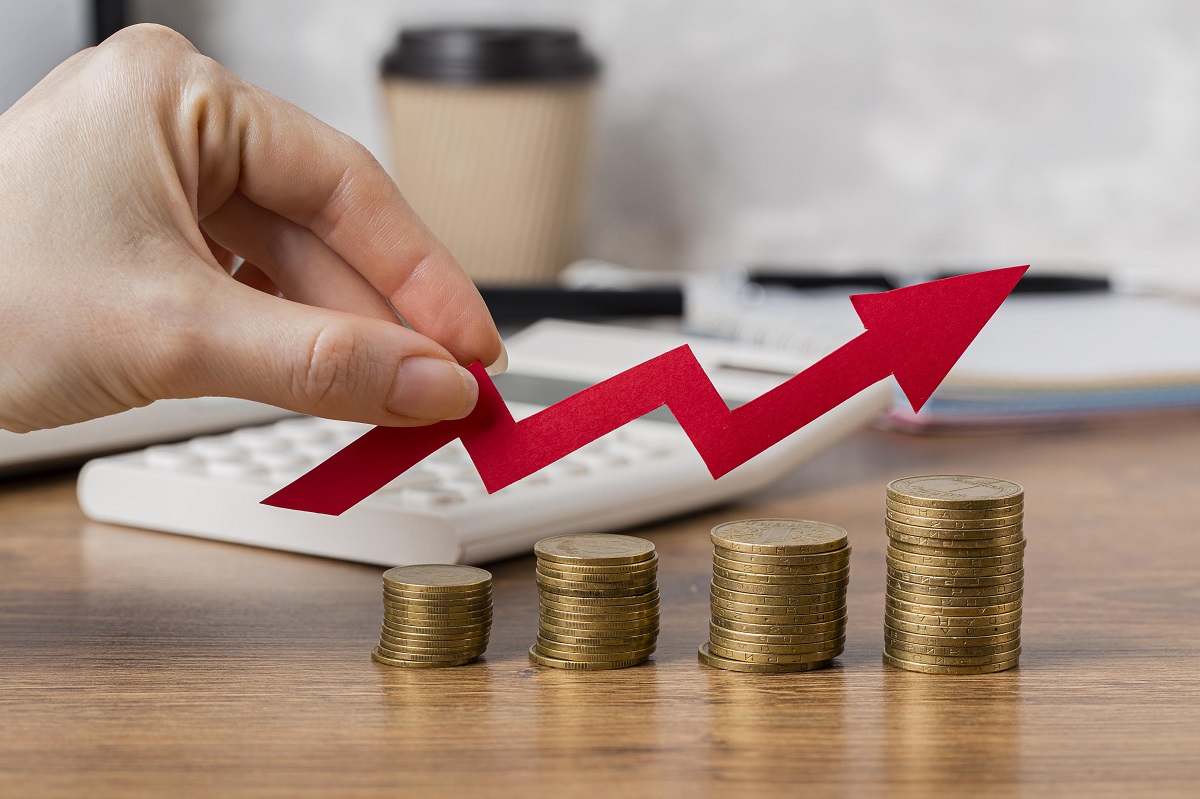





O Economics course This is one of the training programs for those who want to understand in depth the behavior of the financial market, the influence of public policies, and the decisions that drive companies, governments, and consumers.
With the economic changes predicted for the coming years, many students are wondering if Is it still worth studying Economics in 2026?
The answer depends on your purpose.
The Brazilian economic outlook for 2026 should present a Moderate growth, controlled but still high inflation, and a gradual decrease in the Selic rate.
These uncertainties reinforce the importance of Economics professionals, who have the role of interpreting market movements and guiding strategic decisions.
Therefore, areas such as financial analysis, investments, consulting, and economic planning. They remain prominent and in high demand.
In this article, you will understand What is the projected economic outlook for 2026? and discover Is it worth investing in an Economics course next year?.
So keep reading to stay updated!
Economic outlook for 2026
Before deciding to invest in a Faculty of Economics, It is important to understand the scenario that is unfolding in Brazil in 2026.
According to the latest projections of Central Bank and the International Monetary Fund (IMF), the country must register a GDP growth of approximately 1.5%, a slower pace than in 2025, reflecting a context of Global slowdown and domestic electoral uncertainties.
Economic projections and indicators for 2026
- GDP growth: approximately 1.5%, according to the Central Bank.
- Inflation: It tends to remain high, driven by Typical public spending during an election year.
- Selic rate: It should begin a downward trend, benefiting investments and consumption.
- Income: more timid growth in household income mass, which may be reflected in household consumption.
- Key sectors: Mental health, telemedicine, wellness, and digital services are expected to continue to grow, while cyclical sectors (such as construction and heavy industry) may face a downturn.
This type of analysis and environment requires Professionals with strategic vision, critical analysis skills, and technical expertise in economic indicators and policies., precisely the skills developed in Bachelor's degree in Economics.
Should I invest in an Economics course in 2026?

O Economics course It remains one of the best options for those who want understanding market behavior and has an affinity with Numbers, analysis, and decision-making.
An economist is a professional who interprets charts, statistics and indicators, in addition to understanding factors such as inflation, interest rates and exchange rates They directly impact the economic landscape.
If you're thinking about entering this field, check out the following. In which situations is it worthwhile (or not) to invest in an Economics degree in 2026?.
Yes, it's worth saving money.
- Yes, if the focus is on career development:
Professionals with degrees in Economics remain essential in Banks, brokerage firms, consulting firms, public agencies, and companies of all sizes.
Even during times of uncertainty, the areas of Finance, controlling, data analysis, auditing, and strategic planning. They continue to expand.
The course offers a solid foundation for those who wish to grow into leadership positions and work with... financial market or proceed to high-level public competitions, such as the Central Bank and IBGE.
- Yes, if the focus is on entrepreneurship.
Entrepreneurship requires much more than a good idea; it requires... To understand how the economy works and to plan based on real data.
Investing in a Economics course This can be an excellent strategy for those who want to start their own business, whether in Digital services, financial consulting, food, cosmetics, or handcrafted products.
With a keen economic vision, the entrepreneur is able to Identify opportunities, control costs, assess risks, and make safer decisions.
- Yes, if the goal is to complement other courses.
Those who already have degrees in fields such as Administration, Engineering, Accounting or Marketing, among others., you can benefit greatly by investing in a specialization in Economics.
Combining technical knowledge from another area with macroeconomic insight broadens the scope of work and growth opportunities.
For example: a manager with a background in Economics gains a better understanding. market variables that influence the company's performance; an engineer with an economic background knows Analyze costs and investment projections. with more precision.
Read also: Economics or Accounting? See the differences here!
No, it's not worth saving money.
- No, if the focus is on short-term financial return.
A degree in Economics offers consistent benefits, but not immediate ones.
The 2026 scenario, with moderate growth and still high interest rates, indicates that... quick financial return This may not be a reality for those who expect immediate results after graduation.
The course is best suited for those who think in the medium and long term, seeking to build a solid and diverse career.
- No, if the goal is to get a job quickly.
Because it is an area that requires technical knowledge and mastery of complex concepts, Entering the job market can take a little longer, especially for those who don't yet have experience.
The greatest returns usually come when the professional already has a strong grasp of data analysis, finance, and market behavior.
Therefore, if your goal is get a job immediately after starting the course, Perhaps this isn't the best choice right now. But it's something truly possible with your academic progress throughout the course, starting in the first few semesters.
- No, not if you don't have an affinity for numbers and analysis.
The field of Economics requires logical reasoning and an affinity for calculations, graphs, and statistics.
If you are not comfortable working with data and prefer more hands-on or creative activities, the course may become challenging and less interesting over time.
Read also: 8 courses for those who like mathematics
What do you learn in an Economics degree?

A curriculum of the Economics course It combines theoretical, analytical, and applied disciplines.
The student learns to interpret data, understand economic policies, and evaluate national and international scenarios.
Main subjects studied at the Faculty of Economics:
- Mathematics and Statistics;
- Econometrics;
- Accounting and Finance;
- Foreign trade;
- International Trade;
- Investment analysis and portfolio management;
- Microeconomics and Macroeconomics;
- Economic Development.
In addition to the basic subjects, many private colleges in São Paulo, such as... ESEG College, they offer a updated curriculum, with topics related to technology and data analysis, preparing the student for a modern job market.
Specialization in Economics
After completing their undergraduate studies, many professionals choose to pursue a career path. specialization in Economics or a MBA focused on finance, financial markets or a MBA in Business Management.
These training programs broaden knowledge and strengthen resumes, enabling individuals to work in more strategic areas with higher pay.
Conclusion: Is it worth studying Economics in 2026?
Yes, Is it worth investing in an Economics degree? in 2026, provided that your goals are aligned with the course profile and, of course, with your own profile.
Even with a scenario of moderate growth, economists will continue to be a key asset for companies and governments that need professionals capable of understanding the complexity of the economic environment and proposing efficient solutions.
Do you want to study Economics at a top-tier institution?
In ESEG College, you learn Economics In a practical, up-to-date way, connected to the market.
The curriculum is constantly updated and includes technological subjects that prepare students to keep up with new trends in the global economy.
Here, you develop critical thinking, technical expertise, and strategic vision to work in companies, banks, consulting firms, and public agencies.
Discover the Economics degree program at ESEG, learn about its unique features, and prepare for the future with those who truly understand the market!