




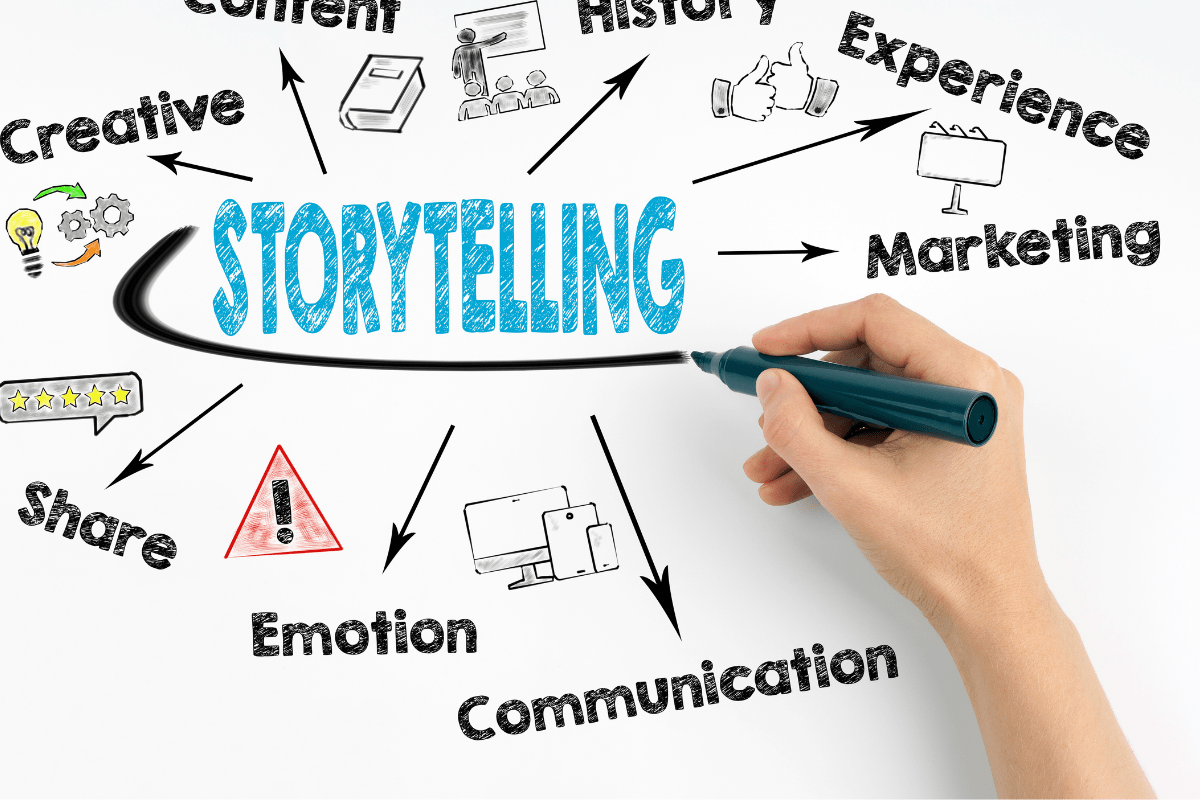
What is storytelling and how can I learn more about it?
Storytelling is a practice that goes far beyond simply telling stories. It's an art that, when well executed, has the power to engage, move, and influence people.
But what exactly is it, and how can you master this technique?
Since the dawn of civilization, we have been drawn to narratives, whether through fairy tales, fables, or films. Therefore, knowing how to tell good stories is a powerful tool for conveying information, values, emotions, and leaving a lasting impression.
Companies, major brands, and leaders recognize this power and use storytelling techniques to capture and hold people's attention.
In this article, we will present its main applications and tips on how to learn more about the subject and boost your career.
Main applications of storytelling
1. Marketing and Advertising
It is common for brands to use storytelling to create narratives that engage consumers and create emotional connections with their brands.
With a compelling story, products and services become more than mere objects: they transform into part of the personal history of the consumer.
Read more: Marketing strategies and their application in digital marketing
2. Media and entertainment
In literature, film, theater, and music, storytelling is at the core of artistic creation. Stories take us to imaginary worlds, challenge our perspectives, and deeply move us.
3. Leadership
Great leaders use storytelling to inspire their teams and communicate visions and values. A well-told story can motivate and unite people around a common goal.
4. Presentations and lectures
Instead of simply listing data and facts, skilled speakers tell stories to illustrate their points and maintain the audience's interest. This makes the information more engaging and easier to remember.
Tips for understanding and learning more about storytelling.
Participate in workshops and courses.
There are many online courses and workshops dedicated to storytelling. Participating in them can provide expert guidance and interaction with other storytellers.
Study narrative structures.
Familiarize yourself with classic story structures, such as the hero, the hero's journey, and the three-act arc. Understanding these structures will help you build cohesive and engaging stories.
Observe and analyze stories.
Watch movies, read books, and listen to stories of various genres. Podcasts are a good alternative. Analyze how authors develop characters, create conflicts, and maintain audience interest.
Practice
Improving your storytelling skills requires constant practice. Tell stories whenever you have the opportunity, whether in work presentations, social conversations, or personal blogs.
Storytelling is a valuable skill in any context, from the business world to the art of communication.
Through the effective use of storytelling, you can captivate your audience, convey impactful messages, and create lasting connections.
Interested in learning more about this? At ESEG College, part of the Etapa Group, you have the chance to learn this art and improve various aspects of your life, including your professional growth.
You can choose from three different categories of Professional Development courses: Basic Storytelling, Storytelling for Business e Storytelling for Professionals, all 100% online and certified by Faculdade ESEG, part of the Etapa Group.
Invest in your knowledge: discover our professional development courses.