By ESEG Team
10/12/2025
Browse by topic
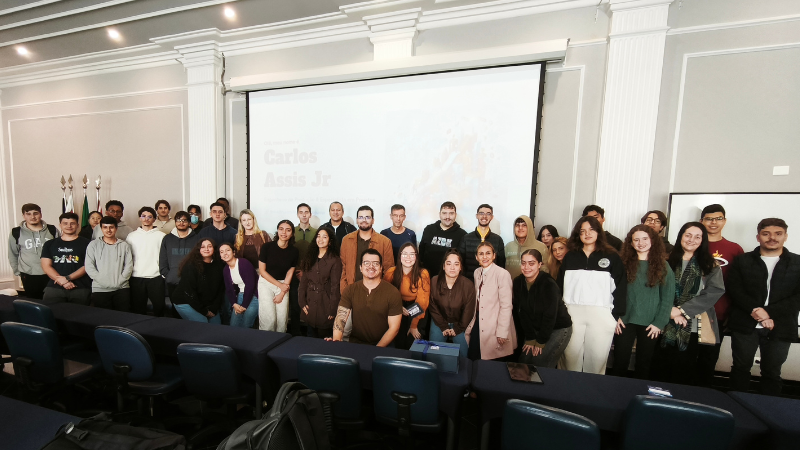
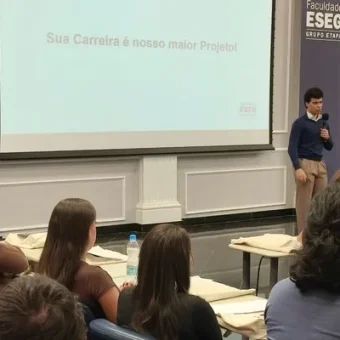
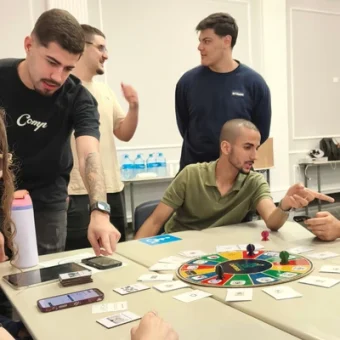
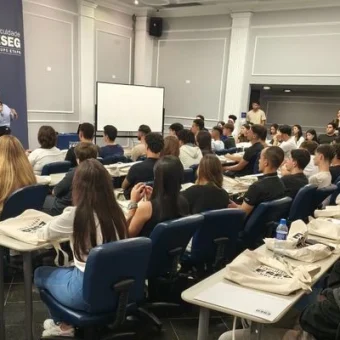
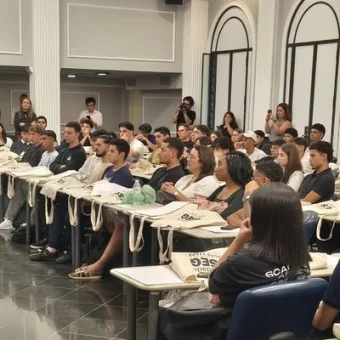
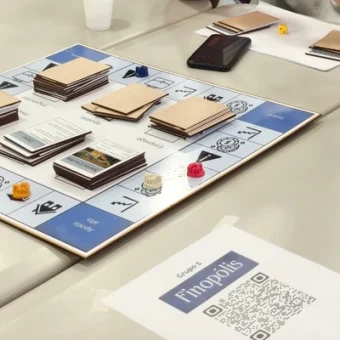
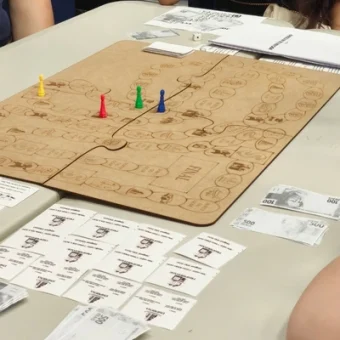
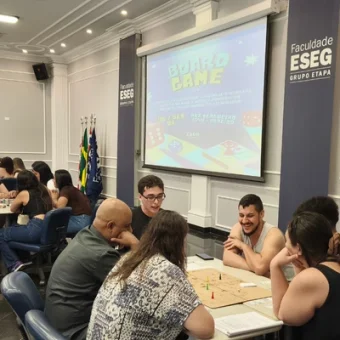
On December 6th, the students of the courses of Economy e Administration from ESEG College, of the Etapa Group, They presented six educational games about financial literacy to the public, which they had developed throughout the semester.
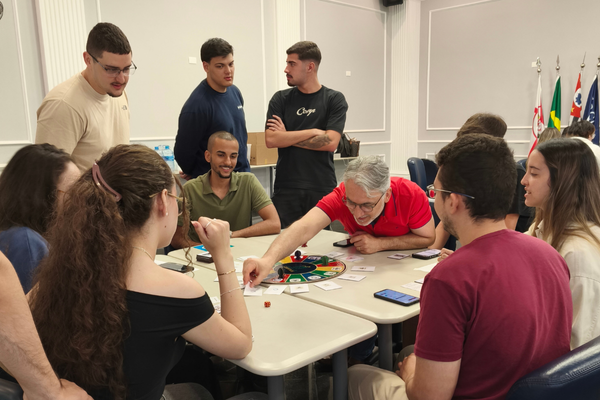
The activity brought together family, friends, and guests, who had the opportunity to test the games, evaluate their functionalities, and experience, in practice, important lessons about financial organization, decision-making, and planning. The aim of the activity was to create interactive experiences capable of connecting financial concepts to people's daily lives.
The diversity of themes and formats was noteworthy. Although each team followed distinct creative paths, all the games were designed to convey fundamental knowledge in a light, accessible, and engaging way.
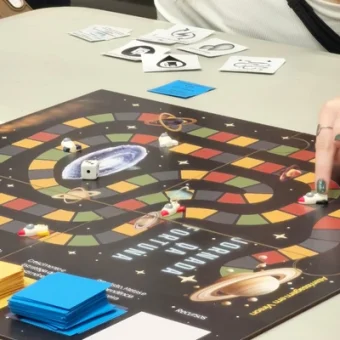
The students created the game boards, defined the rules, and some visual elements, such as game pieces and wood carvings, were produced in ESEG's own laboratories.
According to Professor Maurício Nakahodo, The teacher responsible for the Integrated Project I course explained that the activity used active methodologies, placing students as protagonists in the creation process. “When creating the board games, the students needed to relate the dynamics to financial literacy concepts, whether those they learned in the classroom or knowledge they already possessed. Sometimes, through fun, we learn more than in a formal class,” the teacher explained.
The professor also highlighted that the games helped the participants reflect on their daily financial choices by simulating gains and losses in the narratives. “In behavioral economics, decisions are emotional. In the game, you experience this, you can make mistakes and learn from them, and even test different strategies. This way, the person understands the consequences without having to go through debt or frustration in real life. The game allows you to anticipate situations and prepare for them,” he observed.
The games were inspired by real-life situations from the daily lives of young people and families, such as building an emergency fund, investment risks, unforeseen events, career planning, and personal goals.
Among the offerings were adventures that take players on a space journey to the "Planet of Wealth," as well as more realistic games focused on goals such as studying abroad, buying a car, or acquiring an apartment.
The student of Economics course, Marcos Cruz, He stated that he chose the space theme because of the issue of conserving resources during a journey. "To travel, you need resources and know how and when to use them. Where to invest more and where to invest less. In creating the game, we learned a lot more about our discipline," he said.
The Business Administration student, Bruno Tonini, a member of the group that created the Capital Reserve game, explained that the team even developed its own application to control calculations and player balances. “Each round impacts the participant's income, either adding to it or deducting from it. To have this control, we created an application within a program that performed all the calculations,” he said.
For the students, in addition to teaching concepts to the participants, the project also broadened their practical understanding of topics such as rates, financial calculations, and economic behavior.
Each table received a QR code so that participants could evaluate the gaming experience and the learning provided by the activities created by the students.
In addition to the professor's and audience's feedback, to allow for a more technical analysis of the games, a company specializing in game development, was consulted. Devir Brasil, [Company Name] was called upon to evaluate the games in terms of gameplay, clarity of rules, and ability to teach financial concepts in a simple, practical, and engaging way.
Among the guests, Juliano Bomfim, husband of the economics student, Patricia Bonfim, [Name], tested four different games and praised the students' commitment: “It was clear how dedicated the students were. The dynamics were very different from each other, but they all had educational rules and made sense within the context of financial education. It was a lot of fun.”.
The event marked the conclusion of a cycle of study, research, and collective creation. For the students, it was an opportunity to transform theory into practice; for the visitors, a light, fun, and enriching experience about financial education.

ESEG Team
Stay informed about relevant topics and what's happening at ESEG College.
Your data is safe.
Unavailable
Institutional
Infrastructure
Entry methods
Relationship
Key differentiators
We use cookies to improve your browsing experience.