



Have you ever noticed how some technologies seem to respond instantly?
A connected car identifies obstacles in seconds. An industrial system corrects faults almost in real time. A navigation app calculates a route instantly.
Behind this speed lies an important change in the way data is processed.
It is in this context that edge computing emerges. Instead of sending all information to distant servers in the cloud, this technology allows processing to happen closer to where the data is generated.
In practice, this reduces delays, increases efficiency, improves the user experience, and creates an infrastructure better prepared for increasingly complex artificial intelligence, automation, and digital systems applications.
That was precisely the topic that was addressed in one of the episodes of ESEG Talks, a podcast from Faculdade ESEG, which featured Victor Arnaud, president of Equinix Brazil, for a conversation about “"Digital infrastructure as the invisible engine of the AI revolution"”.
In this article, you will understand what edge computing is, how this technology works, what its differences are compared to cloud computing, and why it is transforming the way companies innovate and technology professionals prepare for the future.
The hot topic at ESEG Talks
As artificial intelligence, cloud computing, and connectivity advance, technologies like edge computing are taking on an increasingly strategic role. Understanding how this infrastructure works is essential to comprehending the transformations that are redefining businesses, careers, and the digital economy.
This was one of the central discussions in the first episode of ESEG Talks, which hosted Victor Arnaud, president of Equinix Brazil, for a conversation about "Digital infrastructure as the invisible engine of the AI revolution".
Throughout the episode, concepts such as interconnection, expansion of computing capacity, evolution of data centers, and the strategic role of modern digital architectures in building an ecosystem prepared for artificial intelligence are explored.
In this article, you will delve deeper into these concepts and understand how technologies such as edge computing, cloud computing, hyperscale, and multi-cloud complement each other to enable the innovations that are transforming business and society.
Watch the full episode: ESEG Talks | Episode 1 with Victor Arnaud (Equinix Brazil)
What is Edge Computing?
Edge computing is a computing model in which data processing and analysis occur close to the source of that information.
This source can be a device, a machine, a sensor, an industrial system, or any connected equipment.
Traditionally, data was sent to large processing centers in the cloud. With edge computing, some of this processing occurs locally.
The result is simple: less waiting time, less bandwidth consumption, and ultimately, faster response times.
Imagine a smart camera in a factory.
If each image had to travel to a remote data center to be analyzed, there would be a delay in decision-making.
With edge computing, the infrastructure near the camera itself performs much of the processing.
This makes critical operations more efficient.
How does edge computing work?
To understand how edge computing works, think of a distributed architecture.
The data no longer has to travel long distances before being processed.
The flow typically happens like this:
- A device generates data.
- An edge system receives this information.
- The processing happens locally or at an intermediate point.
- Only relevant data goes to the cloud.
This model reduces unnecessary traffic and improves operational performance.
There are three elements that help this architecture to function.
Edge devices
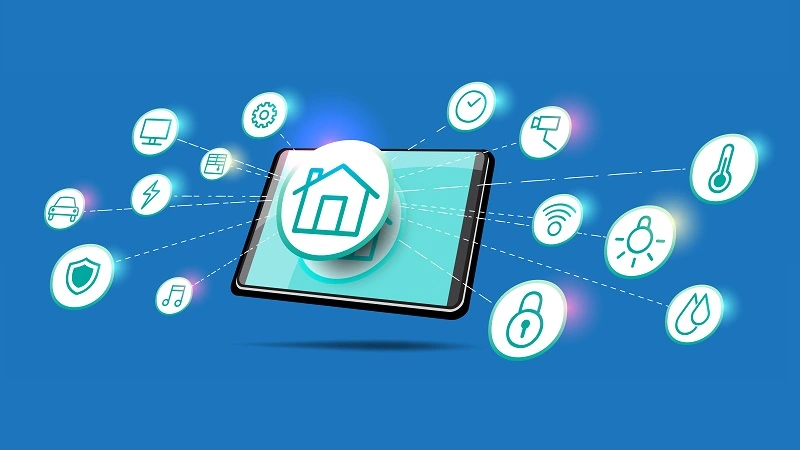
Edge devices are responsible for generating or processing data close to the environment where it originates.
Some examples:
- IoT sensors;
- smart cameras;
- advanced routers;
- industrial equipment;
- network gateways;
- connected vehicles;
- mobile devices.
These devices perform some operations without relying entirely on central servers.
Therefore, they become relevant in environments that demand speed.
Latency and real-time processing
One of the most important concepts in edge computing is... Low latency.
Latency represents the time between sending information and receiving a response.
When this time is reduced, the systems are able to operate in virtually real time.
Imagine a connected hospital environment. Milliseconds can make all the difference.
The same applies to automated production lines or financial systems.
Another important indicator is the network throughput. It measures the amount of data transmitted in a given period.
The more efficient the local processing, the better the overall network performance tends to be.
Modern digital infrastructure
The expansion of edge computing is keeping pace with the evolution of digital infrastructure.
Today, organizations operate in distributed and highly connected environments.
Among the pillars of this transformation are:
- cloud computing;
- high-speed networks;
- distributed processing;
- artificial intelligence;
- interconnection between systems;
- Internet of Things.
This combination allows for the creation of smarter and more scalable operations.
Edge computing and cloud computing
A common question arises at this point.
If there is cloud computing, why use edge computing?
In practice, the two technologies work together. Therefore, it's not a matter of replacement.
Each technology was developed to meet different needs.
Therefore, before comparing them, it's important to understand the role of edge computing and cloud computing. See below.
Cloud computing
Cloud computing centralizes computing resources in remote environments.
The cloud remains essential for:
- mass storage;
- historical analyses;
- global scalability;
- corporate applications.
Edge computing
Edge computing is a computing model that processes data close to where it is generated, such as from sensors, IoT devices, or industrial equipment, reducing the time required to send information to remote servers.
Edge computing delivers:
- quick response;
- traffic reduction;
- local decisions;
- continuous operation.
Modern companies typically combine both models.
What is the difference between Edge Computing, Cloud Computing, Hyperscale, and Multicloud?
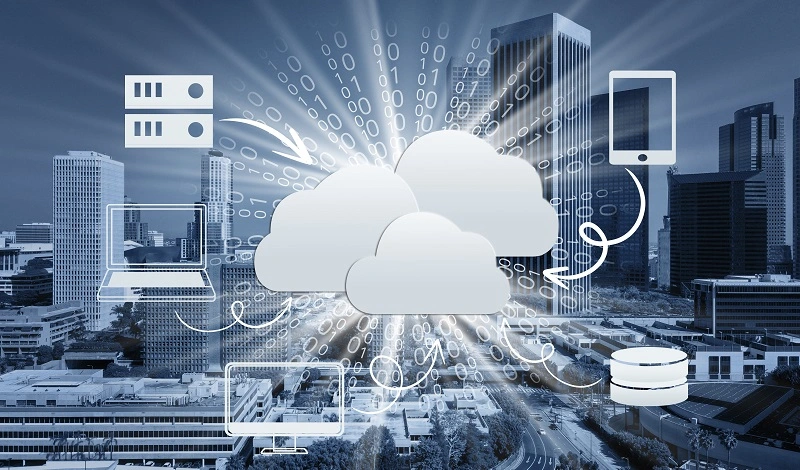
These terms appear together frequently and can be confusing.
Let's simplify.
Edge Computing
Processing close to the data source.
Focus on speed and low latency.
Cloud Computing
Centralized computing resources accessed via the internet.
Focus on elasticity and scalability.
Hyperscale
Hyperscale refers to the ability of an IT architecture to massively, continuously, and automatically expand its resources, such as processing, storage, and networking, to meet increasing demands. The term is widely used in the cloud computing universe to describe environments that operate on a gigantic scale.
In practice, this means supporting millions of users simultaneously and processing large volumes of data without compromising availability or speed.
Think of streaming platforms, social networks, or large cloud services: when millions of people access them simultaneously, the infrastructure needs to automatically keep up with that growth. It's precisely this type of scalability that the hyperscale model delivers: continuous expansion, stability, and large-scale operation.
Multicloud
Multicloud means using more than one cloud provider simultaneously.
When someone asks What would multicloud solutions be?, The answer is simple: a strategy that avoids dependence on a single environment.
Companies are adopting multicloud to:
- increase resilience;
- reduce risks;
- optimize costs;
- to improve availability.
Today, there are already organizations combining edge, cloud, hyperscale, and multicloud in the same operation.
How does Edge Computing impact businesses and AI?
Artificial intelligence has further amplified the importance of edge computing.
Intelligent models rely on speed to generate useful responses.
If everything needs to be sent to remote servers, the gain decreases.
With edge computing, applications can interpret data within their own operating environment.
This opens up possibilities for scenarios such as:
- Faster digital experience;
- Applications respond more quickly;
- The user experiences less waiting time;
- More efficient operations.
Automated processes make decisions without relying on constant communication with the cloud.
- Cost reduction: Less data transfer means better use of infrastructure.
- Scalability for innovation: Companies are able to grow without creating operational bottlenecks.
- Distributed artificial intelligence: AI models can operate closer to the data source. This increases speed and efficiency.
It is no coincidence that areas such as logistics, industry, health, finance, and smart cities are accelerating investments in this model.
What can we expect from the future of edge computing?
The growth of connectivity, AI, and smart devices points to a clear trend.
More processing will happen outside of traditional data centers.
The digital infrastructure of the future tends to be:
- distributed;
- intelligent;
- connected;
- data-driven;
- getting closer and closer to the user.
Professionals who understand this ecosystem go on to occupy strategic positions in technology and business.
Understanding concepts like edge computing, cloud computing, networking, and artificial intelligence is no longer a differentiating factor.
It becomes part of the basic training.
Read also: Colleges of the future: 6 promising higher education courses for the next 10 years.
Conclusion
Edge computing represents a natural evolution in how we use technology.
By bringing data processing closer to its source, companies can reduce latency, increase performance, and create smarter experiences.
At the same time, concepts such as cloud computing, hyperscale, and multicloud cease to compete with each other and begin to form an integrated ecosystem.
For those who follow digital transformation, innovation, and technology, understanding these architectures means understanding how companies are building the future.
And for those who wish to work in this market, the time to develop technical knowledge and strategic vision has already begun.
Want to understand more about technology, innovation, and the challenges of the digital market? Learn more about... Computer Engineering course from the ESEG College, part of the Etapa Group and discover ways to build a career connected to the future.
Watch the full episode about Digital Infrastructure and the AI Revolution:
Frequently Asked Questions about Edge Computing
What is edge computing?
A model that processes data close to the source to reduce latency.
Edge computing replaces cloud computing?
No. The two technologies work in a complementary way.
What is multicloud?
Using multiple cloud providers within the same strategy.
What is hyperscale?
Infrastructure designed for rapid growth while maintaining performance.