Article written by Professor Marcelo Dias Carvalho and Professor Rodrigo Aquino
The pandemic caused by the novel coronavirus in 2020 drastically affected many people and various sectors of the economy worldwide. In the search for solutions to face the crisis, we observed good and innovative actions in diverse spheres. In these circumstances, it was not only the health sector that benefited from research. Social actions and technology gained strength and space.
While the medical and pharmaceutical fields focus on developing medicines, treatments, and vaccines, the social sphere sees companies and individuals assisting the less fortunate. Regarding mechanisms to combat the pandemic, we have both good and bad examples in the political arena across all nations. In the technology sector, companies and institutes have joined forces to study and implement actions that can help humanity in its current situation facing the global pandemic.
In this context, our current technological situation allows us to use resources that enable the study and analysis of generated data at a speed never before possible. With this, the response to problem situations can be much faster and more effective when we use predictive techniques and more efficient analysis strategies.
Biochemical data on COVID-19 in treated patients, as well as the historical evolution of the disease worldwide, allow for predictions of future related events. The goal is to better direct resources and mobilize the necessary inputs for more effective care for people.
Diagnoses can be made more quickly by teaching algorithms to identify problems in patients' X-ray images or even from other available tests.
Next, we explore how a branch of science that combines Statistics, Mathematics, Robotics, and Computer Science has contributed to these studies and improvements. This is Artificial Intelligence (AI) and its multifaceted fields of application. We invite the reader to take a journey through the article and reflect on three segments of AI that have contributed to the quest to minimize the damage caused by the pandemic.
In Ribeirão Preto (SP), at Supera Parque – a research and innovation center in partnership between USP and the local city hall – researcher Paula Cristina dos Santos leads a study to develop an application that uses AI. The technology will identify patients infected with Covid-19 from simple lung x-rays.
Using strong statistical principles, the model searches for common characteristics in images resulting from lung damage caused by Covid-19. The algorithms trained the program with X-ray images from patients in Brazil, China, the USA, and Italy.
In China, a highly developed AI-powered technology and services giant, Alibaba has created a system for recognizing computed tomography (CT) scan images. The intelligent system is able to correctly identify a patient with COVID-19 961 times in just 20 seconds, with an accuracy rate higher than that of doctors. For training, 5,000 images of COVID-19 patients were used over two weeks.
This branch of knowledge in Artificial Intelligence is known as Computer Vision. The field has many applications in other areas of our daily lives and has helped in the fight against the pandemic.
To help reduce overcrowding and hospitalization costs, Baptist Health – a non-profit healthcare organization in the US – has developed an online remote monitoring system for its patients that tracks the evolution of each person's health condition in real time.
The system uses machine learning techniques to send alerts to the medical team if it identifies anomalies. Furthermore, it allows the patient to receive better care at home or in hospitals at the same time.
This is an area of AI that uses sensors on the human body and the development of algorithms that recognize abnormal changes in the organism, which helps the medical team to better monitor patients. Mechanisms are already under development to monitor changes, for example, in diabetes and the automatic injection of medications. In this way, it will improve people's quality of life.
Once again in China, the use of robots helped to reduce the spread of the coronavirus. Autonomous robots were used to transport food and medicine to patients in quarantine. This reduced the risk of infection among medical and support staff.
Autonomous robots that emit ultraviolet-C light (effective in combating the virus) and others that spread hydrogen peroxide vapor were used to help disinfect environments and reduce contagion rates.
To further reduce contagion, drones equipped with cameras and facial and temperature recognition systems were used. As a result, it was easier to monitor crowds and potential vectors.
To bring patients closer to their families, hospitals have been using telepresence robots for contact. At the Hospital das Clínicas in São Paulo, a group of professionals from the humanization, palliative care, and innovation sectors are already testing robots with attached tablets for better communication with patients' friends and family.
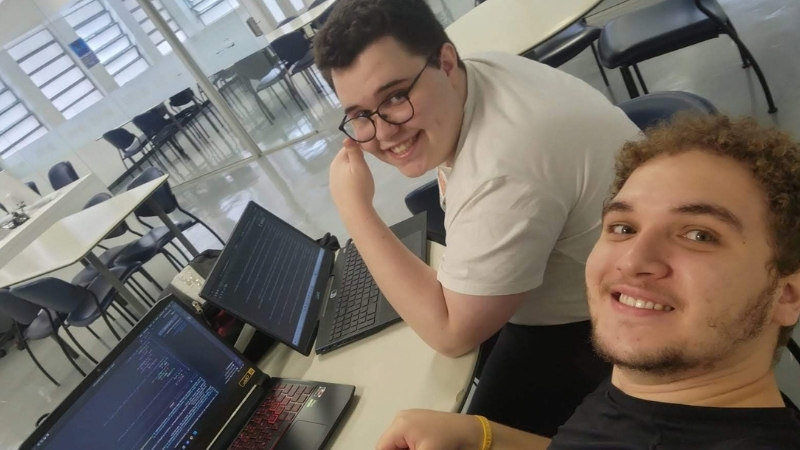
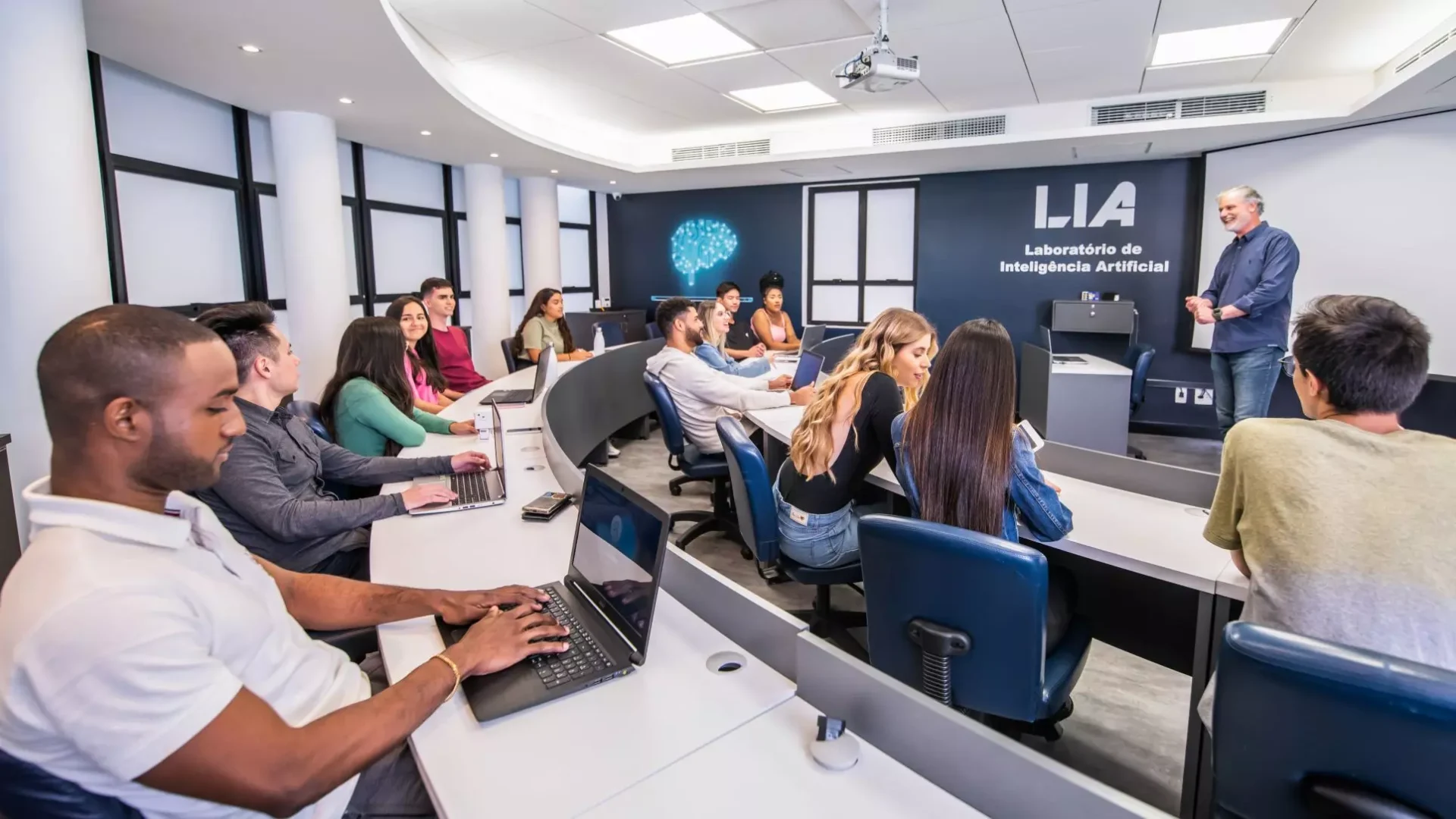
The AI and Robotics Center at ESEG, a college within the Etapa Group, aims to expose students to the techniques and technologies that enable the development of these intelligent systems. Whether it's dealing with everyday problems or a project motivated by a partner company, students can develop their problem-solving skills and create modern AI-based solutions. The institution provides full support with teaching materials and adequate infrastructure in the laboratories.

The approach adopted by the Center will provide several learning paths that permeate the study of machine learning and AI. These paths allow the student to choose their learning route and adapt it according to the needs of their problem and the moment in which they are situated.
These learning paths may contain content dependent on others. However, students will always have assistance with their studies at the Center, so that their learning is optimized. Some of the available learning paths are:
Students have access to this space and equipment provided by ESEG so that they can use it to enrich their knowledge and develop relevant solutions for their personal development and, above all, for society.