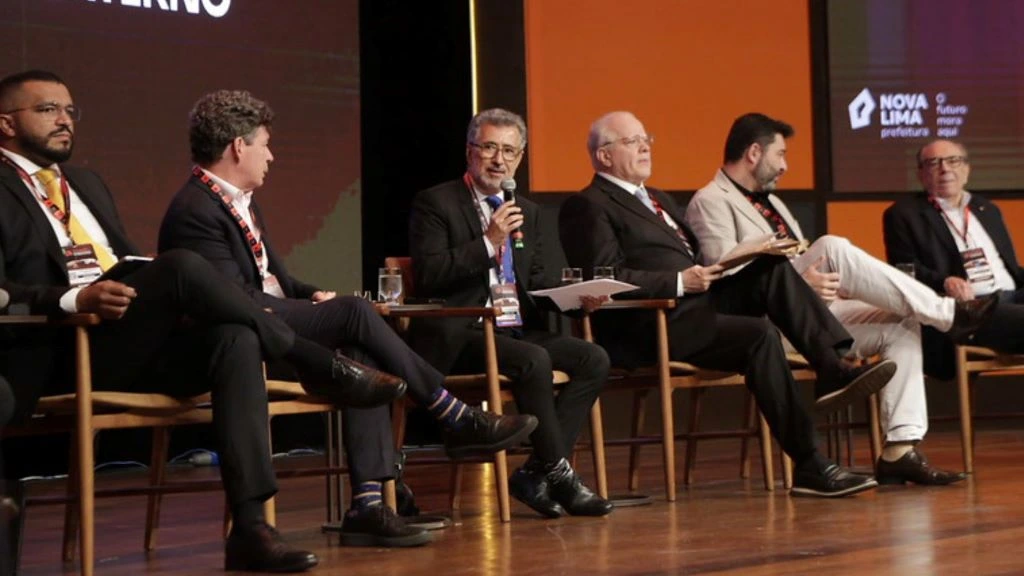
Professor of Law, Leonardo David Quintiliano, a member of ESEG College, part of the Etapa Group, and from the Brazilian Observatory of Artificial Intelligence, gave a lecture at 2nd National Meeting on Artificial Intelligence of the Courts of Auditors (2nd ENIATC), held on March 30 and 31, 2026, in Belo Horizonte.
The event brought together experts, legal scholars, and public administrators to discuss the impacts of Bill No. 2,338/2023, which proposes the legal framework for Artificial Intelligence in Brazil.
The main focus of the debate was the search for a balance between technological innovation in the public sector and the legal certainty necessary to protect citizens' rights.
During his presentation on management and external control, Professor Leonardo Quintiliano highlighted the importance of controlled environments for testing new technologies, known as "regulatory sandboxes".
According to the student, this tool allows the public sector to innovate safely, experimenting with AI solutions before large-scale implementation. "The sandbox allows precisely this balance between a more rigid legal framework and a reality that demands adaptation and experimentation," he explained, citing successful examples such as the PIX system.
The debate at the 2nd ENIATC reinforced the idea that artificial intelligence should be seen as an assistant tool, not a replacement for human consciousness, even though it is efficient in analyzing large volumes of data.
For Leonardo, the greatest challenge today is not only technical, but also ethical and institutional. He stressed that regulation should prioritize prudence and responsible use, ensuring that technology is always at the service of society and transparency.
The participation of teachers from ESEG College In events of national importance such as ENIATC, the faculty reaffirms its commitment to academic leadership.
By bringing the expertise of its faculty to forums that discuss the future of public policy, ESEG ensures that the content taught in the classroom is fully aligned with the frontiers of innovation and law.