
Business Analytics vs. Business Intelligence: Understand the difference.
Business analytics vs. Businesses Intelligence!
You've probably heard of both terms, but do you know what they mean and the difference between them?
The advance of technology This made it necessary for companies to update and improve their business practices, requiring tools and professionals capable of using them.
For this article, we have prepared information that will clarify for you what each represents within a company, the reason why they are not the same, and therefore, why one cannot replace the other.
Power BI: Everything you need to know about the course
What is Business Analytics?
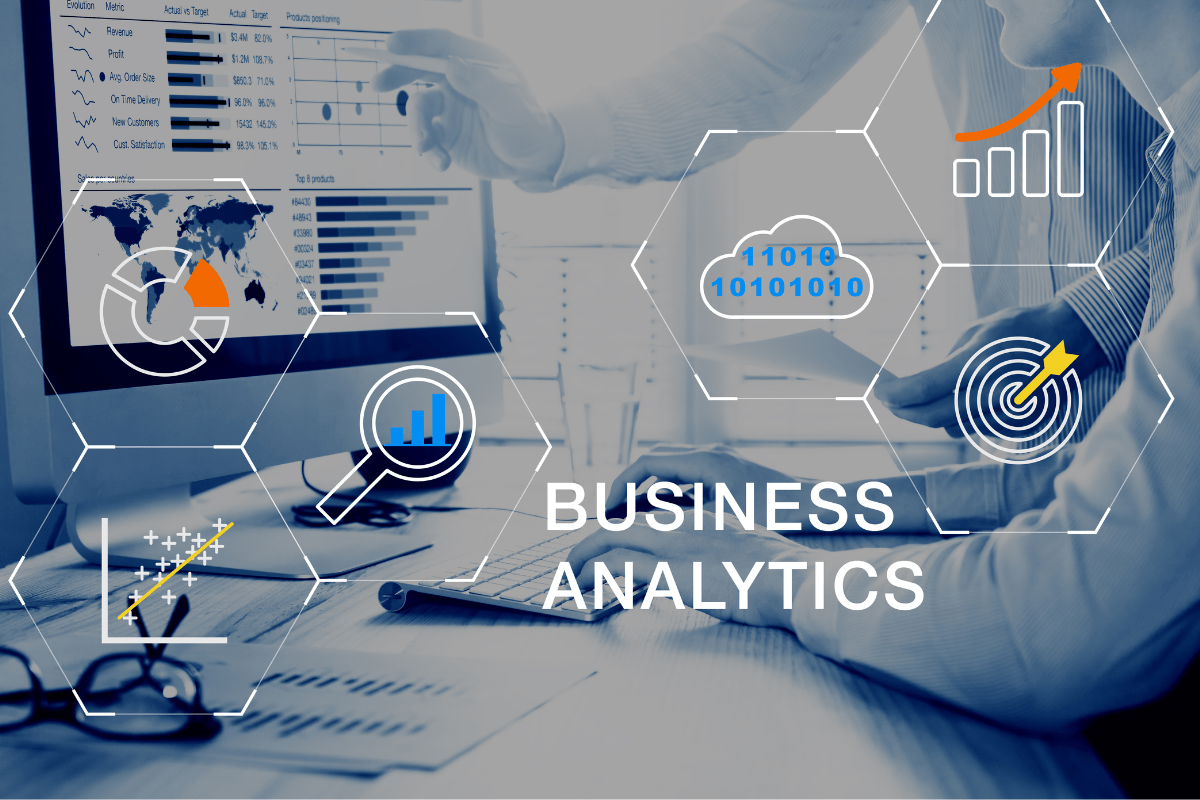
Business Analytics, or business analysis, is a concept created to develop a company's skills and competencies by analyzing business intelligence and, in this way, adapting to technological evolution.
Based on business analysis using all the data an organization has available, it is possible to make data-driven decisions, that is, decisions based on concrete planning, information gathering and analysis, and cross-referencing data from internal and external sources.
The main objective of Business Analytics It involves providing information that clearly indicates what motivated the events analyzed and proposing steps for solutions to be followed.
The proposed steps focus on actions that can be put into practice, not just theoretical aspects, aiming for speed in processes, optimization, and delivery of objective results.
The application of BA techniques enables the preparation of reports with quantitative and qualitative insights into what is being analyzed.
What is Business Intelligence?
Very similar to Business Analytics, Business Intelligence also consists of the collection, storage, analysis, processing, and application of data, including tools, infrastructure, and applications that allow for optimizing a company's performance.
It is useful for helping managers with planning and strategies when there is no starting point yet; essentially, it is a tool that can be used to structure a system of metrics.
The metrics established by BI provide opportunities for insights into any matter relating to a company's or organization's business, such as market research, operational techniques, communication processes, and audience research.
As a process, it transforms and gives new meaning to a large volume of information on topics related to the subjects covered in order to determine and achieve objectives.
Business analytics vs. Business Intelligence: what's the difference?
Although the concepts of both are often confused, they are different tools that individually play an important role within a company.
Business intelligence, also known as BI, encompasses a range of platforms and solutions, with a primary focus on business intelligence, or strategic planning.
Business analytics is a tool more focused on predictive analysis through data collection and processing, allowing the construction of future market models, with a raw analysis of data and its internal and external information.
With Business Intelligence (BI), it's possible to define how data will be collected, while with Business Analytics (BA) the data has already been collected, and the quantitative and qualitative aspects are defined.
Therefore, applying one concept does not replace, nor should it replace, the other, as they are complementary in achieving business success.
A professional with extensive knowledge of Business Intelligence and Business Analytics strategies has a great chance of securing an important position within a company.
At ESEG College, part of the Etapa Group, we offer an MBA program focused on applying this knowledge. Check out our offerings and enroll today.
MBA in Business Management: everything you need to know about the course