put Allison
12/05/2026
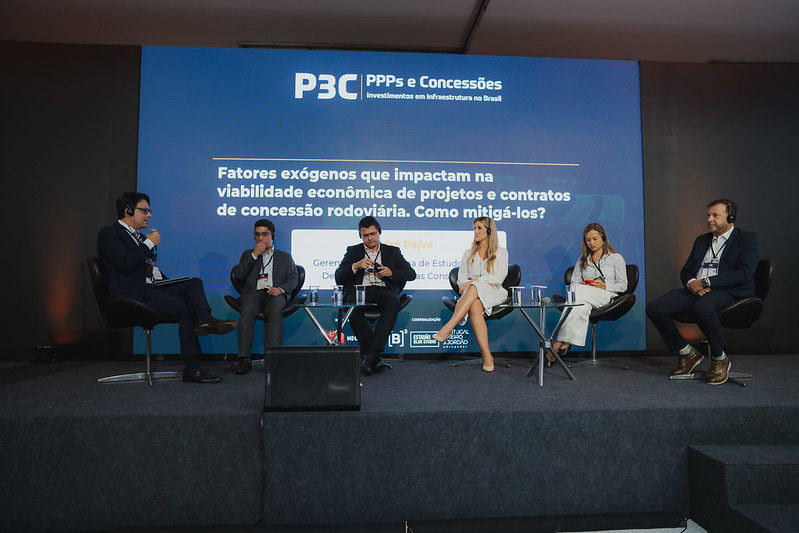
The P3C event, a platform that seeks to make the business environment more predictable and secure for investors in Brazil by following environmental, social, and governance criteria, organized by Nectar Produtora, is an annual meeting focused on the concessions and public-private partnerships sector.
This year, the event took place in February, and one of the highlights was the roundtable discussion "Exogenous factors that impact the economic viability of highway concession projects and contracts. How to mitigate them?", moderated by Professor Christian Fernandes Gomes da Rosa from ESEG Faculty and an expert in the field.
The debate brought together leading experts in the field, such as Luciano Lourenço da Silva, former director of ANTT; Fernanda Alen Gonçalves da Silva, Undersecretary of Concessions and Partnerships of Minas Gerais; Larissa Wendling, Superintendent of Road Projects at INFRA SA; Luciano Uchoa Carneiro da Cunha, CEO of Concessionária Nova Rota do Oeste; and André Paiva, Senior Manager at Tendências Consultoria.
The discussion addressed the relevance of exogenous risks, external events or factors that can impact a project, contract, or economic activity, but which are beyond the control of the parties involved. In the context of highway concessions, these risks can affect the financial viability and execution of contracts, highlighting how unforeseen events can impact these long-term contracts and the need for effective instruments to guarantee the economic and financial balance of the concessions.
Regarding the topic, Professor Christian highlighted: “Concession contracts are, obviously, incapable of predicting everything that could affect their execution throughout their 20 or 30-year term. What is clear is that, faced with exogenous challenges, unrelated to the management of the granting Public Authority or the Concessionaire, the private agent responsible for managing the highway, what matters is that the contract and the regulations can provide adequate means for the rapid and safe contractual rebalancing whenever a risk of this nature significantly impacts the activities.”.
The topic discussed at the event is also addressed in the classroom, especially in Administrative, Financial, and Economic Law courses. The lecture was open to the public upon registration, establishing itself as an essential space for qualified debate on infrastructure and concessions in Brazil.
Stay informed about relevant topics and what's happening at ESEG College.
Your data is safe.
Monthly fee of ESEG Faculty Professor Participates in Event on Highway Concessions
Unavailable
*Prices valid for enrollment in the second semester of 2026.
You can get a discount based on your performance in one of the ESEG College selection processes.
Institutional
Infrastructure
Entry methods
Relationship
Key differentiators
We use cookies to improve your browsing experience.