By Renata Heining
13/05/2026
Browse by topic
The event brought together experts from the public, academic, and private sectors to discuss building digital resilience policies in the country.
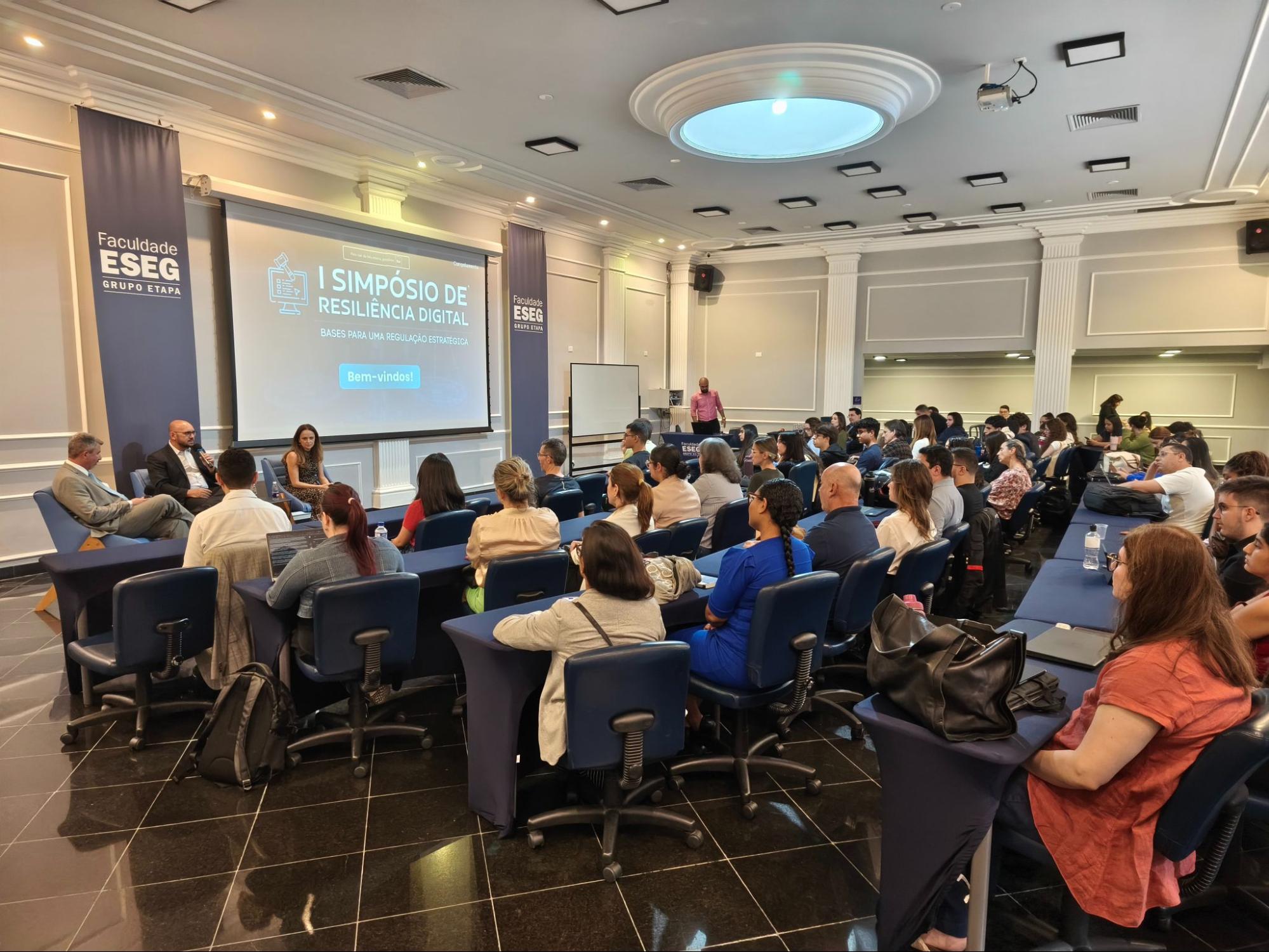
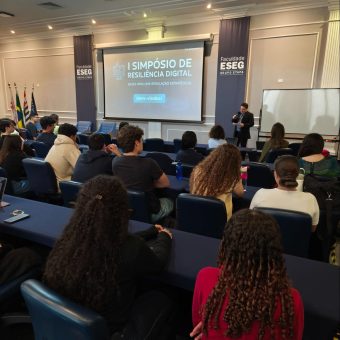
A ESEG College, from Grupo Etapa, promoted on May 7th, the 1st Symposium on Digital Resilience: Foundations for Strategic Regulation.
The event brought together nationally renowned experts to discuss how Brazil should structure itself legally in the face of the growing wave of cyber threats and the need to ensure the continuity of essential services in an increasingly digitalized environment.
The symposium featured representatives from institutions such as FEBRABAN, the Public Prosecutor's Office of São Paulo, the National Cybersecurity Committee, the Ministry of Justice, USP, and the private sector, promoting reflections on prevention, response to digital attacks, protection of critical infrastructures, and the impacts of technological transformation on law.
During the opening, Professor Amanda Scalisse Silva, a lecturer in Criminal and Procedural Law at ESEG and one of the initiators of the project, announced that the symposium is part of an even larger project aimed at creating a study group on digital resilience.
“The goal is to collaborate in a concrete way with the regulation of digital resilience in Brazil. We will study the legislation, discuss proposals, and prepare documents that can be presented to the Legislative Branch and public institutions,” stated the professor.
The goal of the extension group is to bring together students, professors, and specialists to produce technical knowledge that helps in the development of guidelines aligned with contemporary challenges.
The event's opening featured Professor Fernando do Couto Henriques Júnior, coordinator of the Law degree program at ESEG, and Beatriz Dias Rizzo, partner at Dias Rizzo Sociedade de Advogados, who highlighted the faculty's ability to give voice to issues of great importance.
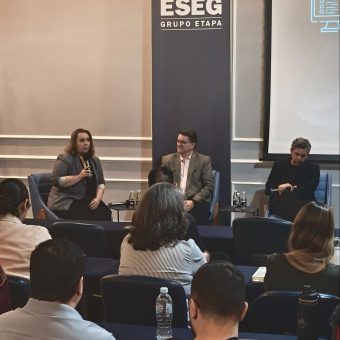
In the first panel, Valdir Assef Junior, Cybersecurity Manager at FEBRABAN; Márcia Mônica Nogueira Mendes, Federal Criminal Expert; and Richard Gantus Encinas, Prosecutor at CyberGaeco/MPSP, explored the concept of resilience and the challenges to its consolidation in Brazil.
The debate emphasized that resilience means not only avoiding attacks, but developing the capacity for adaptation, response, and recovery in the face of digital crises. "It's about shifting from thinking 'if I am attacked' to 'when I am attacked, what action will I take and how will I prevent it from happening again?'" Márcia pointed out.
The second panel, featuring Juliana Abrusio from the National Cybersecurity Committee and João Paulo Orsini Martinelli from the Ministry of Justice, provided an overview of the Brazilian situation.
Although crime has migrated to the digital environment in pursuit of profit, it is noticeable that the State still lacks the resources for oversight and punishment.
Juliana highlighted that the population still feels lost when facing digital problems and doesn't know how to seek help, even though Brazil has many regulations. "We have a lot of regulations, but we lack the resources for enforcement and punishment," the expert stated.
During her presentation, Juliana also shared case studies and data on cybersecurity in Brazil, including the reduction in cyberattacks on banks, which went from approximately 500 to 12 incidents per year. She made it clear that prevention is now more vital than repression.
The closing session, led by Celso Poltronieri Neto of C3W Consult; Cristina Godoy, a member of the CIAAM/USP management committee; and Álvaro Teófilo, a professor at IBGC, focused on the impacts of digital vulnerability in critical sectors such as energy, telecommunications, and the financial system.
For students of Law School of ESEG, The symposium was an opportunity to understand the practical application of laws in a world where the Constitution predates the internet.
Gabriel Costa de Toledo Piza, a first-semester law student, highlighted the value of the experience: “This symposium allowed me to have a broader view of how the law should keep pace with technological evolution and to understand the legal gaps that exist in this scenario.”.
For Valdir Assef Junior, Cybersecurity Manager at FEBRABAN And as moderator of the first panel, the discussion is urgent and strategic for different areas of society. “It’s a super current and important topic for the market, for the State, and for academia. It’s an innovative initiative for the field of Law and very relevant for opening new perspectives for students who are entering a transforming market,” he highlighted.
At the end of the meeting, the symposium reinforced the need for society and institutions to move beyond simply reacting to attacks and towards strategies for preparation, adaptation, and operational continuity in the face of potential digital crises.
With the success of this first edition of the Digital Resilience Symposium, ESEG College reaffirms its commitment to being an active voice in building a safer and more resilient digital environment for Brazilian society.


Stay informed about relevant topics and what's happening at ESEG College.
Your data is safe.
Unavailable
Institutional
Infrastructure
Entry methods
Relationship
Key differentiators
We use cookies to improve your browsing experience.